Wisdom teeth removal in Kenya starts from KSh 3,500 for a straightforward extraction and from KSh 15,000 where the tooth is impacted and has to be removed surgically. The honest part is that nobody can price your case properly without an X-ray, which is why the first appointment is a consultation rather than the procedure. Wisdom teeth are your third molars, the last adult teeth to arrive, and they usually turn up between the ages of 17 and 25. Plenty of them never need to come out at all.
On this page
- What wisdom teeth are, and when they appear
- First signs of wisdom teeth coming in
- Signs of an impacted or infected wisdom tooth
- The four ways a wisdom tooth can sit
- Does it actually need to come out?
- What wisdom teeth removal in Kenya costs
- Why our surgical range goes higher than some quotes
- What happens at the appointment
- Recovery, and how to speed it up
- The real risks worth knowing
- What happens if you leave it
- Start with a consultation
- Frequently asked questions
What wisdom teeth are, and when they appear
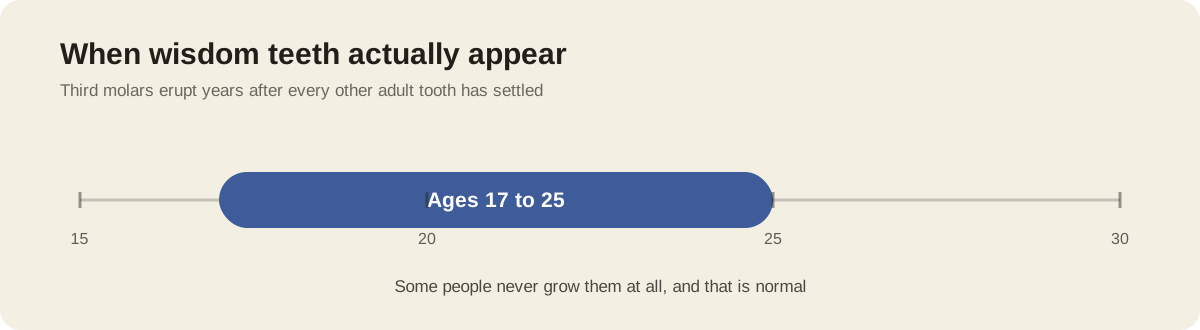
Wisdom teeth are the third molars at the very back of the upper and lower jaws. They are the last adult teeth to erupt, arriving long after everything else has settled into place, typically between the ages of 17 and 25. The Cleveland Clinic notes that roughly eight in ten people have at least one wisdom tooth that never fully emerges, and that having fewer than four, or none at all, is perfectly normal.
The reason they cause so much trouble is simple. Modern jaws are often too small to give a fourth molar the room it needs, so the tooth arrives at an angle, gets stuck against the tooth in front, or only makes it halfway through the gum.
First signs of wisdom teeth coming in
The earliest signs are usually mild and easy to dismiss. Most people notice one or two of these before any real pain starts:
- A dull ache or pressure right at the back of the jaw, often on both sides
- Gums behind the last molar that feel tender, look red, or bleed slightly when you brush
- A small flap of gum over a tooth you can just feel with your tongue
- Aching that spreads toward the ear or temple rather than staying in one tooth
- A feeling that your bite has shifted slightly, or that food keeps catching at the back
None of these on their own mean the tooth has to be removed. They mean it is moving, which is worth having looked at once rather than monitoring anxiously on your own.
Signs of an impacted or infected wisdom tooth
These are a different category and should not be left:
- Severe pain or stiffness in the jaw muscle, making it hard to open your mouth fully
- Bad breath or a persistent foul taste from bacteria trapped under a gum flap
- Visible swelling around the jawline, or redness spreading across the face
- Headaches or earaches caused by pressure on the neighbouring teeth
- Pus, or a bad taste that returns every few weeks and then settles again
If swelling comes with a fever, spreads toward your neck, or makes swallowing or opening your mouth difficult, that is not a wait and see situation. Get seen the same day.
The four ways a wisdom tooth can sit
How a wisdom tooth is positioned decides almost everything about whether it causes problems and what removing it would involve. There are four broad patterns.
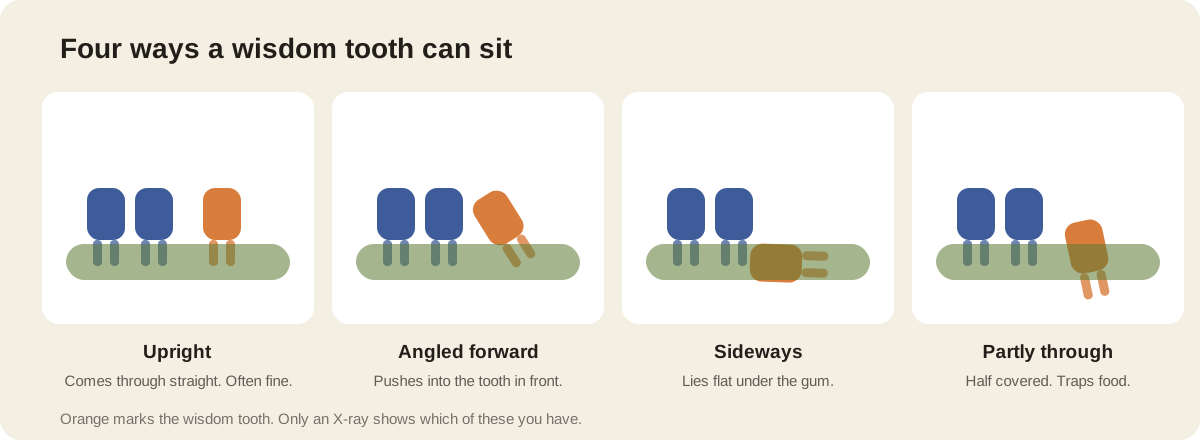
An upright tooth that comes through cleanly often needs nothing at all. An angled tooth pushes into the molar in front and can damage it over time. A sideways tooth lies flat under the gum and rarely erupts. A partly erupted tooth is often the most troublesome of the four, because the gum flap over it traps food and bacteria in a space no toothbrush can reach.
Does it actually need to come out?
This is where a lot of patients are told the wrong thing. Removal is not automatic. The Cleveland Clinic is explicit that a wisdom tooth which erupts in line with the others and causes no problems may need nothing done to it at all.
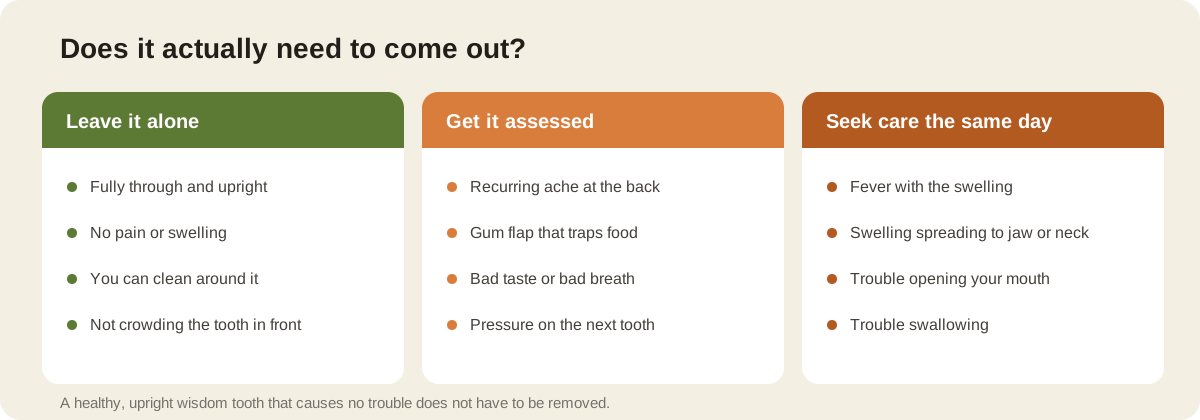
What tips the balance toward removal is usually recurring infection, decay in the wisdom tooth or the one next to it, pressure damaging the neighbouring molar, or a gum flap that keeps flaring up. An X-ray is what settles it, because the part of the tooth that matters most is the part you cannot see.
What wisdom teeth removal in Kenya costs
| What you are paying for | Price |
|---|---|
| Consultation and dental exam, where the decision is made | From KSh 1,000 |
| Dental X-ray, which decides the approach | From KSh 1,000 |
| Simple extraction at Elephant Dental Kiambu | KSh 3,500 to KSh 10,000 |
| Surgical or impacted wisdom tooth removal at Elephant Dental Kiambu | From KSh 15,000 |
| Simple wisdom tooth removal elsewhere in Kenya | KSh 6,000 to KSh 12,000 |
| Surgical or impacted removal elsewhere in Kenya | KSh 10,000 to KSh 25,000 or more |
These are starting figures rather than a quote. The full picture for every treatment sits in our dental prices in Kenya guide.
Why our surgical range goes higher than some quotes
Worth being straight about this, because you will see lower headline numbers elsewhere. A surgical range that starts at KSh 15,000 looks expensive next to a clinic advertising removal from KSh 3,000. The difference is what the figure covers. A low headline price is almost always a simple extraction of a tooth that has come through cleanly, which is work we also price from KSh 3,500. Surgical removal of a deeply impacted tooth can mean lifting a gum flap, removing bone, and sectioning the tooth to get it out in pieces, sometimes close to the nerve. That is a genuinely different procedure. Ask any clinic which of the two their quoted price refers to before you compare.
What happens at the appointment
The consultation comes first. Dr. Winny examines the area, takes an X-ray where it is needed, and tells you whether the tooth is worth watching or worth removing. If removal is the answer, you get a written price for your case before anything is booked. Removal itself is done under local anaesthetic. A simple extraction is quick. A surgical one takes longer and involves stitches, which is explained in full before you agree to it.
Recovery, and how to speed it up
Most people are through the worst of it within two to three days, with a simple extraction settling faster than a surgical one. Swelling usually peaks around the second day and then eases. What actually helps:
- Keep the gauze in place with firm pressure for the first hour, and do not keep checking it
- Use a cold compress on the outside of the cheek on the first day
- Sleep with your head slightly raised for the first two nights
- Stick to soft, lukewarm food for the first day or two, then build back up
- Avoid rinsing hard, spitting, smoking or using a straw for the first 24 hours, since the suction can dislodge the clot and leave you with a dry socket
- Keep the area clean with gentle salt water rinses from the day after, not the day of
The single biggest thing within your control is protecting the blood clot in the socket. Most of the avoidable pain after an extraction comes from losing it.
The real risks worth knowing
Extraction is routine, but no procedure is risk free, and you should hear this before rather than after. Dry socket is the most common complication and shows up as pain that gets worse around day three instead of better. Infection is possible and is why aftercare instructions matter. Lower wisdom teeth sit near a nerve that supplies feeling to the lip and chin, so on deeply impacted lower teeth there is a small risk of numbness that is usually temporary. This is exactly what the X-ray is for, since it shows how close the roots sit to that nerve before anyone starts.
What happens if you leave it
A wisdom tooth causing no trouble can be left and watched, and that is a legitimate plan. A wisdom tooth that is already causing trouble rarely improves on its own. Repeated infections under a gum flap tend to come back, decay in a half covered tooth is difficult to fill and often spreads to the healthy molar in front, and losing that molar is a far more expensive problem than removing the wisdom tooth would have been. If your cover might pay toward treatment, our guide to dental insurance in Kenya explains how to check what your scheme includes.
Start with a consultation
The first step is a consultation and, where needed, an X-ray, each from KSh 1,000. That is what tells you whether your wisdom tooth is a problem at all, and it is the only honest basis for a price. Elephant Dental Kiambu is at Kikinga House, 8th Floor, Biashara Street, Kiambu Town, open seven days a week, 8am to 5pm including Sundays, which matters when a wisdom tooth flares up on a weekend. Call +254 143 178 126 or message us on WhatsApp. You can also see the full list of treatments.
Frequently asked questions
Is it necessary to remove a wisdom tooth?
Not always. A wisdom tooth that comes through upright, causes no pain and can be cleaned properly may need nothing done to it. Removal is usually recommended where there is recurring infection, decay, or pressure damaging the tooth in front.
How much does it cost to remove wisdom teeth in Kenya?
A simple extraction runs from KSh 3,500 to KSh 10,000, and surgical removal of an impacted tooth from KSh 15,000, depending on complexity. A consultation and X-ray, each from KSh 1,000, are what set the actual figure.
At what age do wisdom teeth come?
Usually between 17 and 25, though they can arrive later. Some people never develop them at all, and having fewer than four is normal.
What are the first signs my wisdom teeth are coming in?
A dull ache or pressure at the very back of the jaw, tender or slightly bleeding gums behind the last molar, a small gum flap you can feel with your tongue, and aching that spreads toward the ear.
How long does wisdom teeth removal take?
A simple extraction is usually quick. A surgical removal of an impacted tooth takes longer and involves stitches. You are given a realistic time for your own case once the X-ray has been reviewed.
What can I eat after wisdom teeth removal?
Soft, lukewarm food for the first day or two, then build back up as it settles. Avoid straws for the first 24 hours, since the suction can dislodge the clot and cause a dry socket.
What are the risks of wisdom teeth removal?
Dry socket is the most common, showing as pain worsening around day three. Infection is possible. On deeply impacted lower teeth there is a small risk of temporary numbness in the lip or chin, which is what the X-ray checks for beforehand.
What happens if I do not remove an infected wisdom tooth?
Infections under a gum flap tend to recur, and decay in a half covered tooth often spreads to the healthy molar in front. Losing that molar is a more expensive problem than the removal would have been.
How do I speed up wisdom teeth recovery?
Protect the clot. Firm gauze pressure for the first hour, a cold compress on day one, head slightly raised for two nights, soft food, and no rinsing hard, spitting, smoking or straws for 24 hours.
When should I be seen the same day?
If swelling comes with a fever, spreads toward the neck, or makes swallowing or opening your mouth difficult. Those signs need care straight away rather than an appointment next week.
A wisdom tooth that flares up suddenly, with swelling or pain you cannot sleep through, is treated as an emergency rather than a booked procedure. Our guidance on seeing an emergency dentist in Kiambu covers what to do first and how soon you need to be seen.
One Response