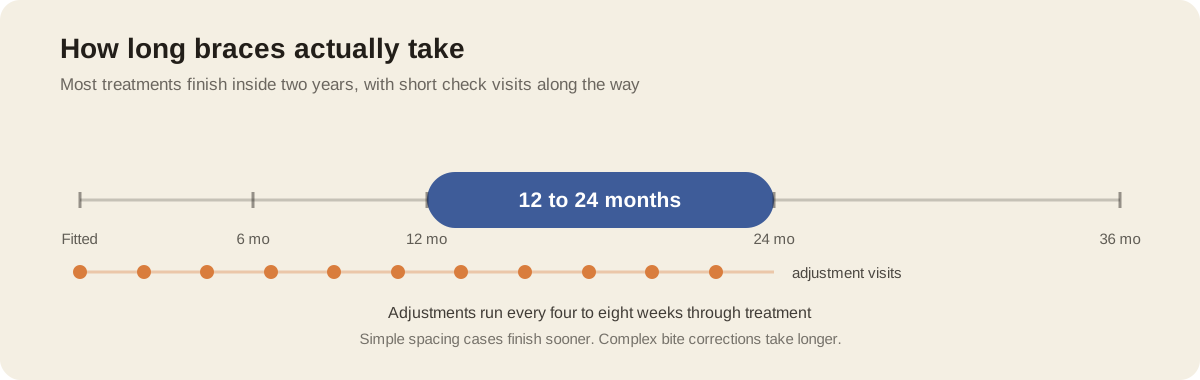
How long do braces take is one of the most common questions after price, and the honest answer is between 12 and 24 months for most patients in Kenya, with a short touch up case sometimes finishing in as little as 6 months and a complex bite correction occasionally running longer than 2 years. The exact length depends on how much your teeth need to move, not on a fixed calendar every patient follows.
Table of Contents
This guide breaks down what actually determines how long braces take to work, how long the fitting appointment itself takes, how long the initial soreness lasts, and what a typical treatment looks like stage by stage, so you can get a realistic estimate for your own teeth rather than a generic answer that could apply to anyone. Many patients want a simple answer to how long do braces take before their first consultation, and while there is no single number, the ranges below get you close.

What Actually Determines How Long Braces Take
Four factors matter more than any other in how long a braces treatment runs. The severity of the case is the biggest one, mild crowding or spacing moves faster than a significant overbite or crossbite that requires more overall tooth movement. Age plays a role too, since younger patients whose jaws are still developing sometimes see faster movement than adults with fully set bone.
How consistently you attend adjustment visits matters, since missing or delaying appointments slows progress. And for removable options like clear aligners, how consistently the device is actually worn has a direct effect on the timeline, which is one reason fixed braces tend to have more predictable durations, they do not depend on daily patient compliance to keep working.
How Long Do Braces Take to Put On?
The fitting appointment is much shorter than most people expect. Getting braces put on takes about 1 to 2 hours in a single visit, and no injections are involved at any point. The dentist cleans and dries your teeth, bonds each bracket in place with a dental adhesive, then threads the first archwire through the brackets and secures it with small elastic ties. You walk out the same day with the braces fully installed and working.
The teeth themselves feel normal during the appointment, the tight, pressing sensation only starts a few hours later as the wire begins doing its job. Most patients take one to two weeks to get fully used to the feeling of brackets against their cheeks and lips, after which the mouth adapts and braces stop being something you consciously notice through the day.
How Long Do Braces Take to Stop Hurting?
Braces are not painful to put on, but the pressure that follows is real, and knowing the timeline makes it far less worrying. Soreness typically starts 4 to 6 hours after fitting, builds overnight, peaks around day 2 or 3, then fades steadily, with most patients feeling largely normal by day 5 and fully settled by the end of the first week. After each adjustment visit, expect a much milder version of the same thing, usually a day or two of tenderness rather than a full week.
Soft foods carry you through those first days comfortably, uji, mashed potatoes, avocado, bananas, well cooked rice and stews all work well, while hard and crunchy foods are worth avoiding until the tenderness passes. A warm salt water rinse soothes any spots where brackets rub the inside of your cheeks. We cover the full day by day experience, including what is normal and what is worth calling about, in our complete guide to whether braces hurt at each stage.
What the First Few Months Actually Look Like
Braces start working from the day they are fitted, the wire begins applying pressure immediately, and most patients see the first visible difference in their front teeth within 4 to 6 weeks. Beyond the broad stages, it helps to know roughly what happens week by week early on, since this is where most of the uncertainty and anxiety sits. In the first two to four weeks, your mouth is mainly adapting to the hardware, and small shifts in the front teeth are often the first visible change patients notice.
By month two, mild crowding or spacing has usually started closing noticeably. Months three through twelve are typically where the bulk of the bite correction and root movement happens, which is less visually dramatic but is what makes the final result stable rather than just straight looking. A useful comparison point, closing a small three millimetre gap between teeth often takes around four to six months on its own, which gives you a sense of scale for how longer, more complex movements add up over a full treatment.
A Typical Braces Timeline, Stage by Stage
The first stage is the initial fitting, where brackets are bonded to your teeth and the first archwire is placed, generally a single appointment. From there, according to guidance from the American Association of Orthodontists, adjustment visits are typically scheduled every six to ten weeks, where the dentist checks progress, adjusts or replaces the archwire, and manages any elastics if your case requires them. This adjustment phase is the bulk of treatment time, often twelve to twenty months depending on complexity. Once teeth reach their planned position, braces come off, and a retainer phase begins, worn full time at first and then typically only at night, to prevent teeth drifting back to their original position.
How Long Do Braces Take to Close a Gap?
Gap closing is one of the most predictable movements in orthodontics, which is why it is also one of the most asked about. A small gap of around 3 millimetres between two front teeth often closes in about 4 to 6 months on its own. Larger or multiple gaps typically take 6 to 12 months to close fully.
Extraction gaps are the slowest, since the space left by a removed tooth is much wider than a natural gap, closing an extraction space usually forms part of a longer overall plan and can take 12 months or more depending on how far the neighbouring teeth need to travel. If elastics or springs are used to help close spaces, wearing them exactly as instructed is what keeps gap closure on schedule.
How Long Do Braces Take for an Overbite, Underbite, or Crossbite?
Bite corrections take longer than straightening alone, because the treatment is coordinating how your upper and lower jaws meet rather than just lining up individual teeth. Braces for an overbite commonly run 18 to 30 months depending on severity, with a mild overbite sitting at the shorter end of that range. Underbites and crossbites fall in a similar range and occasionally longer, since they can involve more significant jaw relationships.
An open bite is also typically a longer case. None of this means a bite problem is bad news, it simply means the estimate you receive after an oral examination will be based on how your specific bite needs to move, which is exactly the kind of case where a generic internet number is least useful.
Short Cases vs Long Cases
Not every braces treatment takes the same amount of time, and it helps to know roughly where your case might fall. A short touch up case, minor spacing or a single crooked tooth, can sometimes finish in around six months. A standard case involving moderate crowding typically runs twelve to eighteen months. A complex case involving significant bite correction, such as a pronounced overbite or crossbite, can run twenty four months or occasionally longer. None of these ranges are promises, they are general patterns, and your actual timeline is set after a full oral examination of your specific bite.
Does the Type of Braces Change How Long Treatment Takes
Not dramatically, in most cases. Traditional metal braces, ceramic braces, and self ligating braces all move teeth using the same underlying pressure and time principle, so the type of bracket has a smaller effect on total treatment time than the complexity of your case does. As a rough guide, metal braces run 18 to 24 months for a typical case and remain the most efficient option for complex corrections. Ceramic braces follow essentially the same timeline.
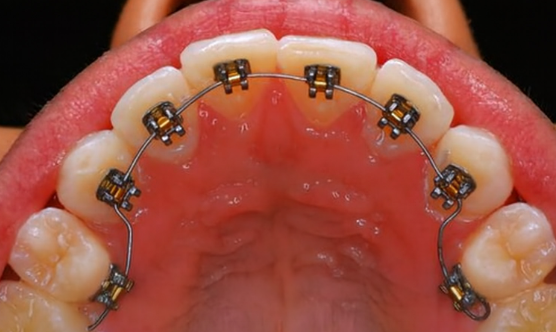
Self ligating braces are sometimes marketed as faster, but the difference for most cases is modest. Lingual braces, fitted behind the teeth, can take slightly longer because of their placement. Our full comparison of brace types and cost covers this in more detail if you are weighing options. Clear aligners can sometimes finish in 6 to 18 months for genuinely mild cases, but only if worn consistently, since the mechanism depends on patient discipline in a way fixed braces do not, as explained in our braces vs clear aligners comparison.
How Long Do Braces Take for Adults Compared to Teenagers?
Age changes the timeline, but not the outcome. Teenagers typically complete treatment in 12 to 24 months because their bone is still developing and responds quickly to orthodontic pressure. Adults average 18 to 30 months for a comparable case, because fully set bone remodels more gradually, this is normal biology, not a sign anything is wrong. Some adult cases with minor corrections still finish inside a year. If you are an adult wondering whether it is worth starting at all, the short answer is that there is no upper age limit for braces, and we have written a full guide on braces for adults in Kenya covering exactly this question.
How Long Do Elastics and Rubber Bands Take to Work?
Elastics, the small rubber bands connecting upper and lower braces, usually enter the picture partway through treatment, during the bite correction phase. Worn exactly as prescribed, they typically do their work over a few months, and patients often notice bite changes within the first several weeks. The catch is that elastics only work while they are being worn, skipping days does not pause progress, it reverses some of it, which is why inconsistent elastic wear is one of the most common reasons a treatment drifts past its original estimate.
What Slows Treatment Down
A few things reliably add time to a braces treatment, and most of them are avoidable. Missed or repeatedly rescheduled adjustment visits are the most common cause, since progress simply does not happen between planned appointments. Broken brackets or wires from eating foods that should be avoided during treatment can also set a case back, since damaged hardware sometimes needs to be repaired before movement can continue as planned. Poor oral hygiene during treatment can lead to gum issues that occasionally require pausing active movement to address first. Attending every scheduled visit and following basic care guidance is the simplest way to keep your treatment on the timeline you were given at the start.
What This Means for Your Braces Price
How long your treatment takes and what it costs are connected. At Elephant Dental Kiambu, braces start from KSh 35,000 per jaw, a price that includes every adjustment visit for the full length of your treatment, whether that ends up being twelve months or twenty four, so a longer case does not mean paying more per visit as it goes. Your exact figure is confirmed at a consultation after an oral examination. See the full braces price breakdown for what is included.
Signs Your Treatment Might Be Taking Longer Than Expected
Most treatments track reasonably close to the original estimate, but a few signs are worth raising with your dentist if you notice them. Little to no visible change over several consecutive adjustment visits, when your dentist expected steady progress, is worth asking about directly rather than assuming it is normal.
Repeated broken brackets or wires, which can happen from certain foods or from playing sports without a mouthguard, tend to add real time to a treatment since damaged hardware sometimes needs repair before movement can continue. And gum or bone health issues that develop during treatment can occasionally require pausing active movement to address first, which is one of several reasons regular dental cleanings alongside your braces treatment are worth keeping up with, not just the orthodontic adjustment visits themselves.
Understanding how long do braces take before you start treatment helps set realistic expectations from day one.
What You Can Actually Control About Your Timeline
While the complexity of your case sets the general range, a few things within your control genuinely affect whether you finish closer to the shorter or longer end of that range. Attending every scheduled adjustment visit, rather than pushing appointments back when life gets busy, keeps progress moving at the pace it was planned around. Being careful with the foods known to damage brackets and wires avoids the kind of repair delays that add real weeks to a treatment.
Good daily cleaning reduces the chance of gum issues that can interrupt active movement. And for anyone using clear aligners rather than fixed braces, wearing them for the full recommended hours each day, rather than skipping days here and there, has a more direct effect on timeline than almost any other single factor, since the whole mechanism depends on consistent wear.
How Long Does It Take to Get Braces Off?
The removal appointment is quicker than the fitting, usually under an hour. The brackets are gently released from each tooth, leftover adhesive is polished away, and impressions are taken for your retainer, most patients describe it as comfortable and largely painless, with a strange smooth feeling on the teeth for a day or two afterwards.
Getting the braces off is not quite the end of the journey though. Retainers are worn full time for the first 3 to 6 months, then at night onward, and this phase is what protects the result, teeth naturally try to drift back toward their old positions, and consistent retainer wear is the difference between a result that lasts and one that slowly undoes itself.
How Long Do Braces Last, Once Treatment Is Finished?
This is a different question from how long braces take to work, and worth separating clearly. The active treatment itself, brackets and wires moving your teeth, typically runs twelve to twenty four months as covered above. How long the result lasts afterward depends almost entirely on whether you keep wearing your retainer as instructed, since teeth have a natural tendency to drift back toward their original position once the braces come off.
Worn consistently, particularly at night for the long term, results genuinely can last a lifetime. Skipped, some relapse is common within the first year or two. Our full guide to braces price in Kenya covers what retainers cost and why they matter as part of the treatment, not an optional add-on afterward.
How to Ask for a Realistic Estimate at Your Consultation

A useful question to ask directly at your oral examination is not just “how long will this take,” but “what would make this treatment take longer or shorter than your estimate.” A dentist who can answer that specifically, pointing to your actual bite and case complexity, is giving you a genuinely useful answer rather than a generic range that could apply to anyone. It is a reasonable question to ask, and a good sign if the answer is detailed rather than vague.
Quick Answers by Case Type
To make how long do braces take easier to estimate for your own situation, here is a rough breakdown by common case type, though a full oral examination is still the only way to get a number specific to you. A minor spacing or single crooked tooth case, sometimes called a touch up case, often finishes in around 6 months.
A standard case with moderate crowding, the most common type seen in a general dental clinic, typically runs 12 to 18 months. A complex case involving a significant overbite, crossbite, or severe crowding can take 18 to 24 months, occasionally longer if the correction is unusually involved. Knowing roughly which category your case falls into, even before your first consultation, tends to make the eventual estimate feel less like an arbitrary number and more like something you already had a reasonable sense of.
Why Two People Can Have the Same Braces and Different Timelines
It is common for two patients to start braces around the same time and finish at noticeably different points, which understandably raises questions. The explanation almost always comes down to the same handful of factors covered above, the starting complexity of each case, how consistently each patient attends adjustment visits, and how carefully each patient avoids the foods and habits that damage brackets and wires. Two patients with visually similar starting teeth can still have meaningfully different underlying bite issues that are not obvious without an X ray and full examination, which is part of why how long do braces take is always answered individually rather than with a single number that applies to everyone.
How Long Do Braces Take in Kiambu?
Braces in Kiambu take the same 12 to 24 months they take anywhere else in Kenya, but keeping to that timeline is genuinely easier when your clinic is local. Missed and postponed adjustment visits are the single most common reason treatments drift past their estimate, and for patients around Kiambu town, attending a visit at Elephant Dental Kiambu on Biashara Street every six to ten weeks is a short errand rather than a cross county trip.
The clinic is open seven days a week including Sundays, so visits fit around work without leave days, and for anyone living along the Kiambu Road side of the county, from Ndumberi and Kirigiti through Ruaka and Banana, the route already passes the door. Your own timeline is set at a consultation after an oral examination, but whatever estimate you receive, local access is one of the quiet factors that helps you actually finish on it.
Why Patients Choose Elephant Dental Kiambu
Elephant Dental Kiambu is a KMPDC-registered dental practice on Biashara Street. Every case is personally assessed by Dr. Winny before a timeline and price are given, so estimates are based on your actual bite rather than a generic average. The clinic is open seven days a week, 8am to 5pm, including Sundays, which matters for a treatment that requires visits roughly every six to ten weeks over a year or more, since finding a convenient slot should not be the hard part of getting your teeth straightened.
Frequently Asked Questions About How Long Braces Take
How long do braces take in Kiambu? Braces in Kiambu take 12 to 24 months for most cases, the same as elsewhere in Kenya. Attending every adjustment visit is what keeps treatment on schedule, which is easier with a local clinic like Elephant Dental Kiambu on Biashara Street, open seven days a week.
What is the average time for braces treatment in Kenya? Most braces treatments in Kenya take between 12 and 24 months, depending on the complexity of the case, with shorter touch up cases sometimes finishing in around 6 months.
How long do braces take to put on? The fitting appointment takes about 1 to 2 hours in a single visit, with no injections, and your braces are fully working from that day.
How long do braces take to stop hurting? Soreness after fitting peaks around day 2 to 3 and largely fades within 5 to 7 days. After routine adjustments, expect only a day or two of mild tenderness.
How long do braces take to close a gap? A small gap often closes in 4 to 6 months, larger gaps in 6 to 12 months, and extraction gaps can take 12 months or more as part of a full treatment plan.
How long do braces take for an overbite? Overbite corrections commonly run 18 to 30 months depending on severity, with mild cases at the shorter end of that range.
How long do braces take for adults? Adults typically wear braces 18 to 30 months, slightly longer than teenagers, because mature bone moves more gradually. There is no upper age limit for braces.
Can braces take longer than 2 years? Yes, in more complex cases involving significant bite correction, treatment can occasionally run longer than 2 years, though this is less common than the typical 12 to 24 month range.
How often will I need to visit the dentist during braces treatment? Adjustment visits are typically scheduled every 6 to 10 weeks throughout treatment, according to guidance from the American Association of Orthodontists.
Does skipping adjustment visits slow down treatment? Yes. Missed or delayed adjustment visits are one of the most common reasons a braces treatment takes longer than originally estimated, since progress happens at these scheduled visits.
How can I get an accurate timeline for my own teeth? The only reliable way is a full oral examination, after which the dentist can give a realistic, case specific estimate rather than a generic average.
How long do braces take to straighten teeth? Most braces treatments in Kenya take twelve to twenty four months to straighten teeth, depending on how much movement is needed and how complex your bite correction is.
Get a Realistic Timeline for Your Teeth
You do not need to guess how long your treatment might take. Message Elephant Dental Kiambu on WhatsApp and describe your case, and the team will give you an honest first read, with no obligation to book anything further. If it makes sense to move forward, the next step is a full oral exam at KSh 6,500, which gives you a fixed timeline and a written price. You can also call 0143 178126 directly, or use the booking calendar on the clinic’s contact and directions page.
9 Responses