How often do you need teeth cleaning is not a one-size-fits-all answer, but for most people with generally healthy gums, every six months is the standard, evidence-backed recommendation. Some people need more frequent visits, three to four months apart, if they smoke, wear braces, or have any history of gum disease. This guide explains what actually determines your ideal schedule, rather than assuming the same interval applies to everyone.
Table of Contents
Table of Contents
If you have been wondering whether the “twice a year” rule genuinely applies to you, or whether you can safely stretch that interval, this guide walks through the real factors your dentist considers, so you can make an informed decision rather than guessing. For the full pricing breakdown, see our teeth cleaning price in Kenya guide.
How Often Should You Get Your Teeth Cleaned? The Six Month Default
The American Dental Association and most dental professionals recommend a professional cleaning roughly every six months for people with generally healthy gums and no significant risk factors. This is the most common answer to how often do you need teeth cleaning, though it is a starting point rather than a rule that fits everyone identically.
This interval is not arbitrary, it is based on how quickly plaque hardens into tartar, generally within a matter of days once it forms, and how long it typically takes for early gum inflammation to develop into something more serious if left unaddressed. Six months gives your dentist a reasonable window to catch developing issues, cavities, early gum disease, before they progress into something more involved and expensive to treat.
Dental Cleaning Every 3 Months: Who Actually Needs It
A six-month schedule is a reasonable default, not a fixed rule that applies to everyone equally. A few groups genuinely benefit from more frequent visits, often every three to four months. Smokers face a higher risk of gum disease and tend to build up plaque and tartar faster, while smoking also masks some of the early warning signs, like bleeding gums, that would otherwise prompt an earlier visit.
People wearing braces or other fixed dental appliances accumulate plaque more easily around brackets and wires, making more frequent professional cleaning genuinely useful during treatment. Anyone with a history of gum disease, particularly after a deep cleaning, typically moves to a three to four month periodontal maintenance schedule rather than returning immediately to six months, since gum disease requires closer monitoring to prevent it recurring.
A few other factors are worth mentioning too. Cleveland Clinic also lists a family history of cavities, a weakened immune system, and periods of significant illness or stress as reasons someone might benefit from more frequent monitoring, even without an existing diagnosis of gum disease. None of these automatically mean you need a shorter interval, but they are worth raising with your dentist so they can factor it into your specific recommendation.
What a Dental Cleaning Every 3 Months Involves That a 6 Month One Does Not
People often assume a three month schedule is the same appointment booked twice as often. It usually is not. The two visits have different names, different procedures and different prices, and understanding the difference explains why the interval is three months rather than four or five.
A routine six month cleaning removes plaque and hardened tartar from the tooth surfaces and just under the gum margin, polishes the teeth, and gives the dentist a look at anything developing. It is a preventive appointment for a mouth that is currently healthy.
A three month appointment for someone with a history of gum disease is periodontal maintenance, which is a different procedure. The pocket depth around each tooth is measured at several points and written down, so this visit can be compared against the last one and any site that is getting worse shows up as a number rather than an impression. Cleaning goes deeper, into the pockets below the gumline where the bacteria that caused the problem actually live. The appointment is longer and generally costs more than a standard scale and polish, which our guide to teeth cleaning prices in Kenya sets out in more detail.
Why three months and not four
The number comes from how quickly the bacteria return. After the pockets are cleaned out, the population below the gumline starts rebuilding, and in most patients it climbs back toward its previous level within roughly three months. A three month recall is timed to interrupt that rebuild before it does fresh damage to the bone and attachment holding the tooth in place. Leave it to six months and the second half of that period is spent losing ground that the cleaning had just recovered.
Three months is a starting point rather than a life sentence. Periodontal recall is increasingly set by risk rather than by calendar, so a patient whose pocket readings stay stable across several visits, who does not smoke, and whose home cleaning is good may be moved out to four or six months. A patient whose numbers keep creeping up stays at three. The measurements taken at each visit are what decide it, which is the main argument for having them taken.
Who ends up on a three month schedule
- Anyone who has had a deep cleaning, also called scaling and root planing, for gum disease. This is the largest group by far.
- Smokers, whose gums both deteriorate faster and bleed less, so the usual early warning is muted.
- People with diabetes, where gum disease and blood sugar control each make the other harder to manage.
- Patients partway through orthodontic treatment, because brackets and wires trap plaque in places a toothbrush cannot reach.
- Anyone whose mouth is persistently dry, commonly a side effect of blood pressure, antidepressant and antihistamine medication, since saliva is a large part of the mouth’s own defence.
- Heavy tartar formers, where the deposit is visibly back within weeks of a clean regardless of how well the person brushes.
If none of those describes you, three monthly cleaning is not something to request. Being cleaned more often than your mouth needs offers no additional protection and repeated instrumentation of healthy root surfaces is not harmless.
Who Might Be Able to Extend Beyond Six Months
Less commonly discussed, but genuinely true for some patients: someone with excellent home care, no history of gum disease, minimal plaque buildup between visits, and low cavity risk may be told by their dentist that a longer interval, occasionally stretching toward nine months or a year, is reasonable for them specifically. This is not a decision to make on your own, it is one your dentist makes based on what they actually observe in your mouth over several consecutive visits, not a general rule you should assume applies to you without that track record.
What Determines Your Ideal Interval
Answering how often do you need teeth cleaning properly means looking past the default and at your actual risk factors. A few honest factors shape what interval actually suits you, beyond the basic six-month default. How quickly you personally build up tartar, which varies noticeably between individuals regardless of how well you brush and floss, some people are simply more prone to it.
Your gum health history, since anyone who has had gum disease needs closer monitoring even after successful treatment. Certain medical conditions, including diabetes, can affect gum health and sometimes warrant more frequent visits. And your home care consistency, since someone who brushes and flosses diligently every day genuinely needs less frequent professional intervention than someone whose home routine is less consistent.
What Happens if You Wait Longer Than Recommended
Stretching the interval between cleanings beyond what your dentist recommends does not immediately cause harm, but the risk compounds gradually rather than showing up all at once. Plaque that would have been removed at a six-month visit continues hardening into tartar, which then requires more extensive scaling to remove at your eventual visit. Small, early-stage cavities or gum inflammation that would have been caught early have more time to progress into something requiring more involved treatment. This is exactly why the recommended interval exists, it is calibrated to catch problems while they are still small and inexpensive to address, not an arbitrary schedule designed to generate repeat visits.
Does Cost Ever Justify Stretching the Interval
This is a fair, practical question many people quietly wrestle with rather than ask directly. Stretching a cleaning interval to save money in the short term often costs more over time, since a longer gap tends to mean more tartar buildup requiring more time to remove, and a higher chance a small issue progresses into something requiring more expensive treatment before your next visit. If cost is a genuine concern, discussing it openly with your dentist, including asking about payment options, tends to be a more sustainable approach than silently delaying visits and hoping nothing goes wrong in the meantime.
Building a Cleaning Schedule Into Your Routine
A few practical habits make sticking to your recommended interval easier. Booking your next appointment before you leave your current one, rather than waiting to remember later, removes the friction of having to think about it months in advance. Setting a calendar reminder a few weeks before your interval is up gives you time to book around a convenient date rather than scrambling last minute. And pairing your cleaning with another regular routine, scheduling it around the same time each year as another recurring appointment, can make it easier to remember consistently.
What If You Have Never Had a Professional Cleaning
If it has genuinely been years, or you have never had a professional cleaning at all, do not let that gap keep you from booking now out of embarrassment or uncertainty about what to expect. Your first cleaning after a long gap will likely take longer than a routine visit, simply because there is more tartar buildup to address, and your dentist may recommend a follow-up sooner than six months to reassess once the initial buildup has been cleared. This is a completely normal starting point, not something to feel awkward about, dentists see this regularly and are focused on getting your gum health on track going forward, not judging how long it has been.
Age Changes the Interval as Much as Risk Does
Children and teenagers often follow the same general six-month guideline as adults, though a dentist may adjust this based on how their teeth and gums are developing, cavity risk during childhood, or whether orthodontic treatment is underway. Older adults sometimes need more frequent monitoring too, since gum recession, dry mouth from certain medications, and other age-related changes can increase plaque buildup and cavity risk in ways that were not a concern earlier in life. Age alone is not the deciding factor, but it is one more input your dentist reasonably factors into a personalised recommendation rather than applying a single interval to every patient regardless of life stage.
Pregnancy and Teeth Cleaning Frequency
Pregnancy is a specific situation worth flagging, since hormonal changes during pregnancy can increase gum sensitivity and the risk of a condition called pregnancy gingivitis, inflamed, sometimes bleeding gums that develop during pregnancy even in people with no prior gum issues. Many dentists recommend maintaining or even increasing cleaning frequency during pregnancy for this reason, and dental cleaning itself is considered safe throughout pregnancy. If you are pregnant and noticing new gum sensitivity or bleeding, mentioning this at your next visit is worth doing rather than assuming it is unrelated to your dental care.
What a Dentist Actually Looks At to Set Your Interval
Your interval is not decided by a generic chart, it is based on what your dentist actually observes over time. This includes how much plaque and tartar has built up since your last visit, since a longer than expected gap can indicate your risk profile is different from the default assumption. It includes gum pocket measurements taken at each visit, tracking whether they are stable, improving, or worsening. And it includes your reported habits, smoking, home care consistency, any new medications, since these change your risk level over time rather than fixing it at whatever it was when you first registered.
Common Reasons People Delay Cleanings, and Why They Rarely Hold Up
A few reasons commonly come up for postponing a recommended cleaning, and it is worth being honest about why most of them do not hold up well under examination. “My teeth feel fine” does not account for the fact that plaque buildup and early gum disease are frequently painless in their early stages, which is exactly why regular professional checks matter regardless of how things feel.
“I’m too busy” is understandable, but a routine cleaning typically takes twenty to thirty minutes, genuinely less time than most people assume, and clinics open on weekends remove much of the scheduling friction. “It’s too expensive right now” is a legitimate concern worth raising directly with your dental provider, since the cost of delaying tends to compound rather than disappear.
Tracking Your Own Cleaning History
A simple, practical habit worth adopting: keep a note, whether on your phone or in a physical planner, of the date of each cleaning and any recommendation your dentist gave about your ideal interval going forward. This makes it far easier to notice if you are drifting past your recommended schedule, and gives you something concrete to reference the next time you are deciding whether it has genuinely been long enough to book again, rather than relying on a vague sense of “it’s probably been a while.”
How This Interacts With Deep Cleaning
If your dentist identifies signs of gum disease during a routine visit, your schedule may shift entirely, moving from a standard six-month cleaning interval to a deep cleaning followed by periodontal maintenance every three to four months. This is explained in more detail in our deep cleaning vs standard cleaning comparison, but the short version is that the interval question and the type of cleaning question are connected, since gum disease affects both how often you need to be seen and what actually needs to happen at each visit.
The Bottom Line on How Often You Need Teeth Cleaning
Six months is a sensible starting assumption for most people, but it is genuinely a starting point, not a fixed rule that applies identically to everyone. Your actual risk factors, gum health history, and home care habits shape what interval is right for you specifically, and your dentist adjusting that recommendation up or down based on what they observe is good, individualised care, not an inconsistency to question.
Quick Answer by Situation
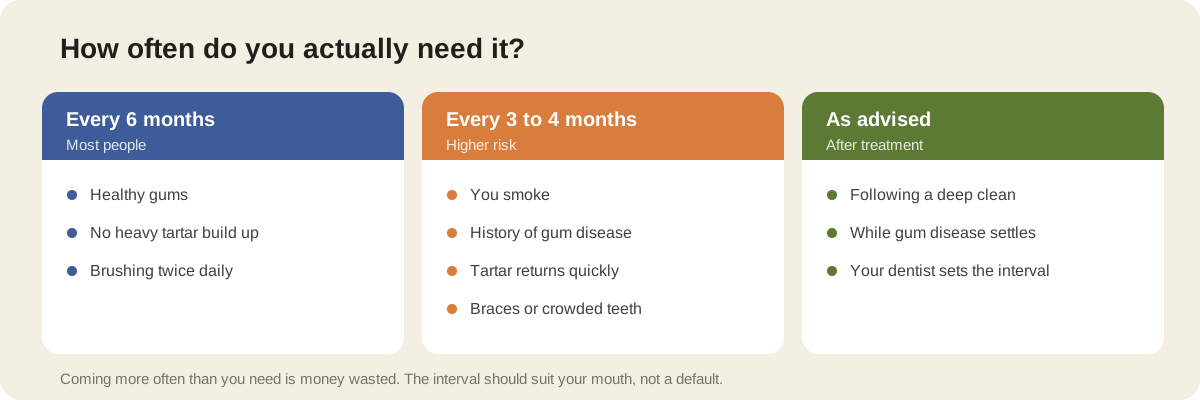
To make how often you need teeth cleaning easier to apply to your own life, here is a quick reference by common situation, though your dentist’s specific recommendation always takes priority. Healthy gums, no risk factors: every six months. Smoker or braces wearer: every three to four months is often recommended. History of gum disease or recent deep cleaning: every three to four months, periodontal maintenance. Pregnant: maintain or consider increasing frequency, cleaning remains safe throughout pregnancy. Excellent home care with a long track record of low plaque buildup: your dentist may suggest extending slightly beyond six months, based on your specific history.
Why Patients Choose Elephant Dental Kiambu
Elephant Dental Kiambu is a KMPDC-registered dental practice on Biashara Street, with patients consistently mentioning unhurried explanations and visible sterilisation between patients. Every cleaning appointment includes an honest recommendation on your ideal interval going forward, based on what your dentist actually observes in your mouth, working within the wider Elephant Dental network. The clinic is open seven days a week, 8am to 5pm, including Sundays, which makes sticking to a recommended schedule genuinely manageable rather than something that competes with a narrow weekday window.
Frequently Asked Questions About How Often You Need Teeth Cleaning
How often should the average person get their teeth professionally cleaned? Most dental professionals, including the American Dental Association, recommend every six months for people with generally healthy gums and no significant risk factors.
Who needs teeth cleaning more often than every six months? Smokers, people wearing braces, and anyone with a history of gum disease typically benefit from more frequent cleaning, often every three to four months.
Can I go longer than six months between cleanings if my teeth feel fine? Only if your dentist has observed a consistent track record of low plaque buildup and good gum health over several visits. This is a decision your dentist makes based on your history, not one to assume on your own.
What happens if I skip my recommended cleaning interval? Plaque continues hardening into tartar, and small issues that would have been caught early have more time to progress, often meaning more extensive and expensive treatment at your eventual visit.
Does having braces change how often I need cleaning? Yes. Braces make plaque more likely to build up around brackets and wires, so more frequent professional cleaning during treatment is generally recommended.
Not Sure What Your Ideal Schedule Is
You do not need to guess. Message Elephant Dental Kiambu on WhatsApp and describe your situation, and the team will give you an honest recommendation, with no obligation to book anything further. If it makes sense to move forward, the next step is booking your cleaning, and your dentist will confirm your ideal ongoing interval based on what they observe. You can also call 0143 178126 directly, or use the booking calendar on the clinic’s contact and directions page.
How often do you need teeth cleaning, according to the evidence
Worth knowing that the six month rule is convention more than settled science. A Cochrane review found insufficient evidence to support or refute a fixed six monthly interval, and a later trial found no added benefit from scheduling cleanings at six or twelve months unless there was a reason to. That is not an argument for skipping cleanings. It is the argument for setting the interval around your own gums, your own tartar build up and your own habits, rather than paying for a date on a calendar.
Ask About My Ideal Schedule on WhatsApp
2 Responses