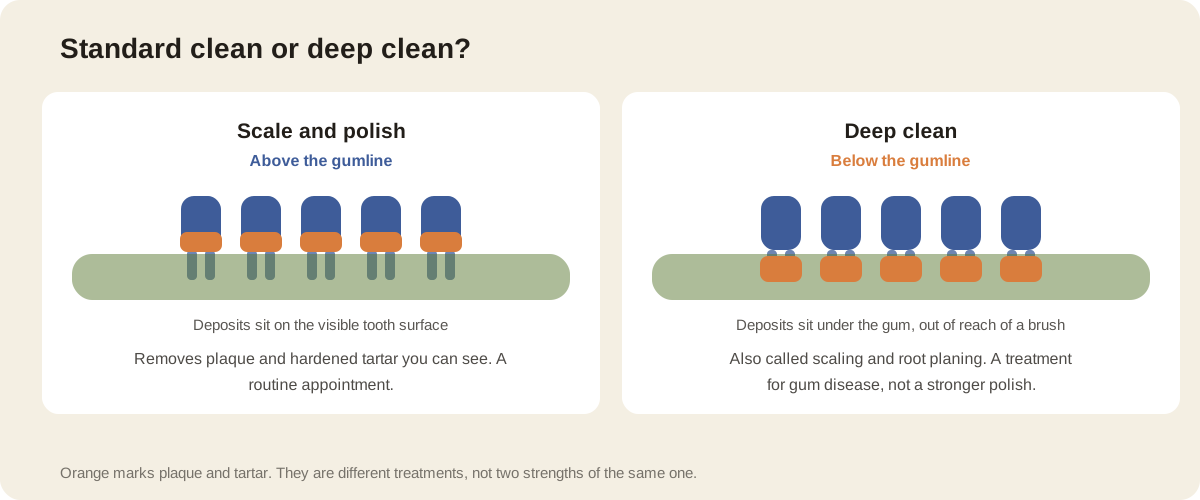
Deep cleaning vs standard cleaning is not a choice between a basic and a thorough version of the same appointment, they are different procedures for different problems. Standard cleaning removes plaque and tartar above and slightly below the gumline for people with generally healthy gums. Deep cleaning, also called scaling and root planing, treats active gum disease by cleaning well below the gumline and smoothing tooth roots so gums can reattach. Your dentist recommends one or the other based on an actual clinical measurement, not a matter of preference or budget.
Table of Contents
Table of Contents
If your dentist has told you that you need deep cleaning rather than a standard cleaning, or you are trying to understand why the price you were quoted is higher than expected, this guide explains exactly what the difference is and why it matters for your gum health, not just your wallet.
The Actual Clinical Difference
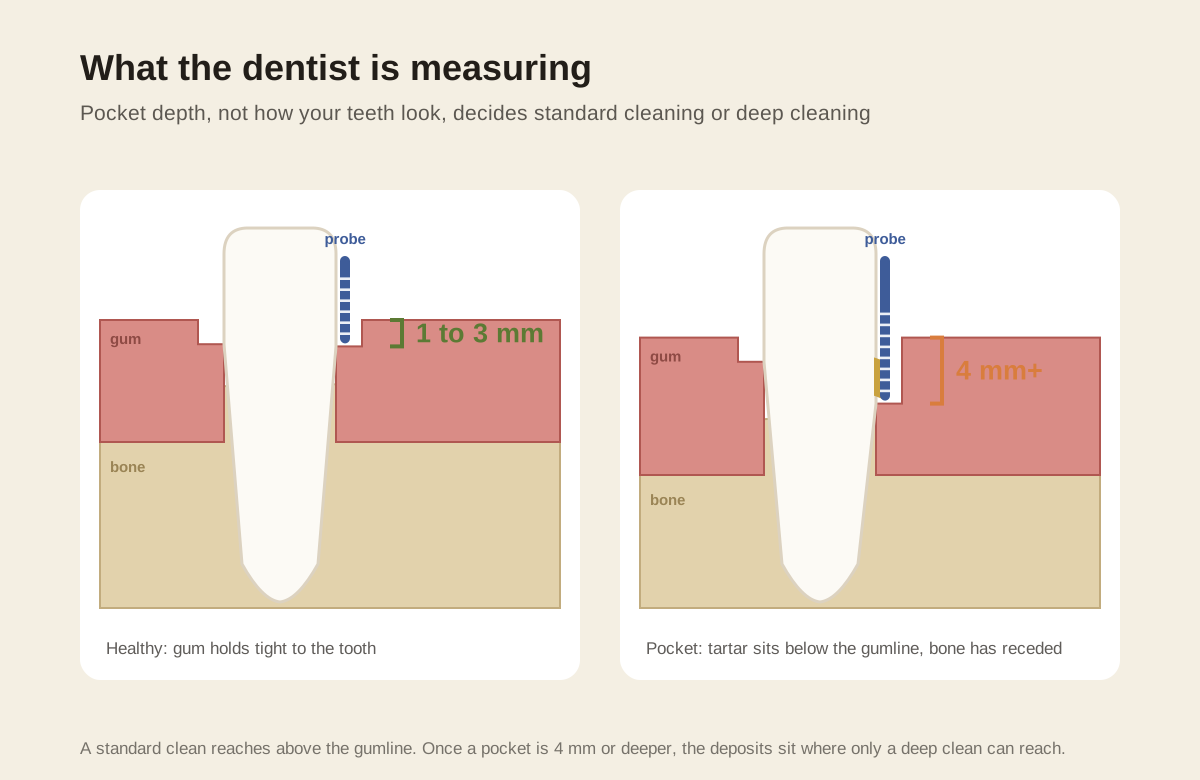
The real distinction comes down to gum pocket depth, a measurement your dentist takes with a small probe around each tooth. Healthy gums typically measure one to three millimetres between the gum and tooth. Once a pocket reaches four millimetres or deeper, it usually indicates bacteria and tartar have built up below the gumline in a way a standard cleaning cannot reach or resolve. This measurement, not how your teeth look or feel, is what actually determines whether you need standard cleaning or deep cleaning.
Deep Cleaning vs Standard Cleaning: Quick Comparison Table
| Factor | Standard cleaning | Deep cleaning (scaling and root planing) |
|---|---|---|
| Who it is for | Healthy or mildly inflamed gums | Gum disease, pockets of 4mm or deeper |
| What it cleans | Above and slightly below the gumline | Well below the gumline, including tooth roots |
| Typical time | 20 to 60 minutes, one visit | 40 to 60 minutes per section, often two visits |
| Anaesthesia | Not usually needed | Often used, since it reaches deeper tissue |
| Follow-up schedule | Every 6 months | Every 3 to 4 months (periodontal maintenance) |
| Goal | Prevent problems in healthy gums | Treat existing infection and inflammation |
| Price at Elephant Dental Kiambu | KSh 3,500 | Priced separately after assessment |
What Standard Cleaning Actually Does
Standard cleaning, sometimes called a prophylaxis, is the routine cleaning most people picture when they think of a dental visit. It removes plaque and tartar from the visible surfaces of your teeth and just beneath the gumline, followed by polishing to smooth the surface and reduce future buildup. It is a preventive appointment, designed for people whose gums are generally healthy, and it is also when your dentist gets a regular look at your overall oral health, catching small issues early. For the full pricing breakdown, see our teeth cleaning price guide.
The Middle Ground: Gross Debridement
There is actually a third category worth knowing about, sitting between standard and deep cleaning. According to Cleveland Clinic, gross debridement is a deeper cleaning recommended for people who have not visited a dentist in a long time or have unusually heavy plaque and tartar buildup, without necessarily having the gum disease that would call for a full deep cleaning. It clears away the significant surface buildup first, which sometimes reveals gum health that is better than it appeared, or occasionally reveals that deep cleaning is genuinely needed once the heavy buildup is out of the way. If you are booking your first cleaning in several years, do not be surprised if your dentist recommends this step before a routine cleaning can properly assess your gums underneath.
What Deep Cleaning Actually Does
Deep cleaning works in two connected steps. Scaling removes tartar and bacteria from below the gumline, reaching into the periodontal pockets that have formed as gum disease progresses. Root planing follows, smoothing the surface of the tooth root itself, which removes rough spots where bacteria cling and gives your gum tissue a clean surface to reattach to as it heals. According to Cleveland Clinic, this combination targets the bacteria actually causing gum disease, not just surface buildup, which is why it is classified as a treatment rather than routine maintenance.
Signs You Might Need Deep Cleaning Rather Than Standard Cleaning
A few signs commonly prompt a dentist to recommend deep cleaning during an exam. Gums that bleed regularly when brushing or flossing, not just occasionally. Gums that appear consistently red, swollen, or tender rather than a healthy pink. Persistent bad breath that does not improve with normal brushing. Gum recession, where gums appear to be pulling away from the teeth, sometimes exposing more of the tooth root than before. Any looseness in a tooth that was not there previously. None of these guarantee you need deep cleaning specifically, but they are exactly the signs worth a dentist actually measuring your gum pockets to check.
Why Deep Cleaning Often Takes Two Visits
Deep cleaning is frequently done in sections, sometimes called quadrants, treating one area of your mouth per appointment rather than everything at once. This is partly about thoroughness, since deeper, more meticulous cleaning below the gumline takes longer than a standard cleaning, and partly about comfort, since treating your whole mouth in one long session with anaesthesia throughout would be more taxing than most patients want. Each session typically runs forty minutes to an hour, and your dentist will explain the specific plan for your case rather than assuming a fixed number of visits applies to everyone.
Does Deep Cleaning Hurt More Than Standard Cleaning
Some discomfort is more likely with deep cleaning than standard cleaning, simply because it reaches deeper, already inflamed tissue. This is exactly why local anaesthesia or a topical numbing gel is commonly used for deep cleaning, which standard cleaning usually does not require. After treatment, mild tenderness, swelling, or slight bleeding for a few days is common as the gum tissue begins healing, generally manageable with over the counter pain relief and, if prescribed, a medicated mouthwash. Our full guide on whether teeth cleaning hurts covers standard cleaning sensitivity separately.
What Happens After Deep Cleaning
Recovery from deep cleaning typically involves a few days of mild sensitivity and tenderness as inflamed gum tissue settles and begins reattaching to the tooth root. Following your dentist’s aftercare guidance, gentle brushing, any prescribed antibacterial rinse, and avoiding very hard or crunchy foods for the first day or two, supports that healing process. Unlike standard cleaning, which returns you to a normal six-month schedule, deep cleaning is usually followed by periodontal maintenance visits every three to four months rather than six, since gum disease requires closer monitoring to keep it from returning. Our full guide to how often you need cleaning explains this schedule difference in more detail.
Why Deep Cleaning Costs More Than Standard Cleaning
The price difference reflects real additional factors, not simply a higher markup on the same procedure. Deep cleaning requires more skill and clinical judgement to perform correctly, since working below the gumline near root surfaces demands more precision than surface scaling. It takes significantly more chair time, often across two visits rather than one. And it frequently uses anaesthesia and specialised instruments suited to reaching below the gumline safely. These are genuine cost drivers, not an arbitrary price increase for the same basic service.
Why This Matters Beyond Your Mouth
Untreated gum disease is not only a concern for your teeth and gums. According to Cleveland Clinic, bacteria associated with gum disease can enter the bloodstream through inflamed gum tissue, and ongoing research has linked untreated periodontal disease to broader health concerns, including cardiovascular health and complications for people managing diabetes. This does not mean every case of mild gum inflammation poses a serious health risk, but it is a genuine reason to take a deep cleaning recommendation seriously rather than viewing it as an optional upsell.
Can You Choose Standard Cleaning Instead if Cost Is a Concern
This is worth addressing honestly. If your dentist has diagnosed active gum disease with pocket depths of 4mm or more, a standard cleaning will not adequately address the bacteria and tartar below the gumline, and many dental professionals consider it inappropriate to perform only a standard cleaning once that diagnosis has been made, since it does not treat the underlying problem. If cost is a genuine barrier, it is worth discussing directly with your dentist rather than opting for a cleaning that will not resolve the actual issue, since untreated gum disease tends to become more expensive and more difficult to treat the longer it progresses.
Does Insurance Cover Deep Cleaning Differently Than Standard Cleaning
Many dental insurance plans, where dental coverage exists, treat deep cleaning as a distinct category from routine prophylaxis, since it is classified as periodontal therapy rather than preventive maintenance. Some plans cover a portion of deep cleaning specifically because it addresses an active disease process, similar to how a filling or root canal is treated as restorative care rather than a cosmetic extra. Coverage varies significantly by provider and plan, so confirming directly with your insurer what is covered under periodontal treatment, as distinct from routine cleaning, is worth doing before your appointment if cost is a concern.
Common Myths About Deep Cleaning
A few misconceptions come up often enough to address directly. The first is that deep cleaning is just an aggressive version of a regular cleaning, when it is actually a different procedure treating a different problem, active gum disease rather than routine maintenance. The second is that deep cleaning is unnecessary if your teeth do not hurt, when gum disease frequently causes little to no pain in its earlier stages, which is exactly why pocket depth measurement, not how your mouth feels, is the diagnostic tool that matters.
The third is that once you have had a deep cleaning, you will always need them going forward, when in fact the goal of deep cleaning combined with good home care and regular maintenance visits is often to bring your gums back to a healthy state where future cleanings can return to a standard schedule.
How to Avoid Ever Needing a Deep Cleaning
Prevention is genuinely more comfortable and less expensive than treatment. Keeping up with standard cleanings every six months prevents plaque from ever hardening into the below-gumline tartar that leads to gum disease in the first place. Daily brushing twice a day and flossing at least once a day, particularly focusing on the gumline where plaque accumulates fastest, meaningfully reduces your risk.
Avoiding smoking matters too, since it is one of the strongest risk factors for gum disease progression and also masks some of the early warning signs, like bleeding, that would otherwise prompt an earlier visit. None of this guarantees you will never need deep cleaning, some people are simply more prone to gum disease regardless of home care, but consistent prevention meaningfully lowers the odds.
What Happens if You Skip a Recommended Deep Cleaning
Declining a deep cleaning recommendation does not make the underlying gum disease disappear, it typically continues progressing quietly. Left untreated, the bacteria and inflammation below the gumline can lead to further gum recession, deeper pockets, and eventually bone loss around the affected teeth, which is one of the leading causes of tooth loss in adults. What starts as a treatable case of gum disease can become a more advanced case requiring more extensive treatment, sometimes involving a periodontist rather than a general dentist, simply from being left unaddressed. If cost or timing is the barrier, discussing that openly with your dentist is a better path than skipping the recommendation entirely and hoping the issue resolves on its own.
The Bottom Line on Deep Cleaning vs Standard Cleaning
The two are not competing options you get to pick between based on preference, they are different treatments for genuinely different clinical situations, determined by an actual measurement of your gum health, not by how your teeth feel or what you would prefer to pay. A dentist recommending deep cleaning is identifying a real problem worth addressing, not upselling a more thorough version of routine maintenance.
Why Patients Choose Elephant Dental Kiambu
Elephant Dental Kiambu is a KMPDC-registered dental practice on Biashara Street, with patients consistently mentioning unhurried explanations and visible sterilisation between patients. Every cleaning appointment includes an honest gum health assessment, so you know clearly whether standard cleaning or deep cleaning is what your gums actually need, working within the wider Elephant Dental network. Every step is explained before it happens, including exactly why a particular recommendation is being made.
The clinic is open seven days a week, 8am to 5pm, including Sundays, at Kikinga House on Biashara Street, a short walk from Kiambu Town Main Stage.
Frequently Asked Questions About Deep Cleaning vs Standard Cleaning
How do I know if I need deep cleaning instead of standard cleaning? Only a dental exam, measuring gum pocket depth with a small probe, can confirm this. Pockets of 4mm or deeper generally indicate deep cleaning is needed rather than standard cleaning.
Is deep cleaning more painful than standard cleaning? It can involve more discomfort since it reaches deeper, often inflamed tissue, which is why local anaesthesia or numbing gel is commonly used, something standard cleaning usually does not require.
Why does deep cleaning take two visits? Deep cleaning is often split by section, or quadrant, of the mouth to allow for thorough, precise treatment of each area and to keep each appointment more comfortable than treating the entire mouth at once.
How often do I need follow-up visits after deep cleaning? Typically every 3 to 4 months, called periodontal maintenance, rather than the standard 6-month schedule, since gum disease requires closer monitoring to prevent it returning.
Can I just get a standard cleaning if I have gum disease to save money? This is not recommended once gum disease has been diagnosed, since standard cleaning does not reach the bacteria below the gumline causing the problem, and delaying proper treatment often makes gum disease more difficult and expensive to treat later.
What are the different types of teeth cleaning? The main types are standard cleaning (prophylaxis) for healthy gums, gross debridement for heavy buildup after a long gap between visits, and deep cleaning (scaling and root planing) for active gum disease. Your dentist determines which applies to you during an exam.
Not Sure Which Cleaning You Need
You do not need to self-diagnose. Message Elephant Dental Kiambu on WhatsApp and describe any symptoms you are noticing, and the team will give you an honest first read, with no obligation to book anything further. If it makes sense to move forward, the next step is an exam that measures your actual gum health and confirms which treatment and price applies to you. You can also call 0143 178126 directly, or use the booking calendar on the clinic’s contact and directions page.
What the evidence actually says about how often
Worth knowing that the six month rule is convention more than settled science. A Cochrane review found insufficient evidence to support or refute a fixed six monthly interval, and a later trial found no added benefit from scheduling cleanings at six or twelve months unless there was a reason to. That is not an argument for skipping cleanings. It is the argument for setting the interval around your own gums, your own tartar build up and your own habits, rather than paying for a date on a calendar.
Ask Which Cleaning I Need on WhatsApp
2 Responses