The right age for braces is not a single fixed number. The American Association of Orthodontists recommends a child’s first orthodontic evaluation by around age 7, well before braces themselves are usually needed, so that an orthodontist can catch developing issues early. Full braces treatment more commonly starts between ages 11 and 14, once most permanent teeth have come in, though the right timing always depends on the individual child’s teeth and jaw development rather than age alone.
Table of Contents
Table of Contents
Why an Early Evaluation Matters, Even Before Braces Are Needed
At around age 7, most children have a mix of baby and permanent teeth, which gives a dentist a useful early window to assess how the permanent teeth are coming in. This early check can identify developing issues such as crowding, an improper bite, or teeth coming in at an unusual angle, well before they become more complicated to correct. An early evaluation does not usually mean your child needs braces at 7, in most cases it simply means keeping an eye on development and knowing roughly when treatment, if needed, is likely to make sense.
Three Signs Worth Getting Checked Early
A few signs are worth a dental check sooner rather than waiting for a scheduled evaluation. Early or late loss of baby teeth compared to siblings or peers at a similar age. Difficulty chewing or noticeable breathing through the mouth rather than the nose. Teeth that meet in an unusual way, such as the upper and lower teeth not lining up, or the jaws appearing to shift when the child bites down. None of these automatically mean braces are needed, but they are reasonable reasons to book a check rather than wait.
Right Age for Braces: Kids vs Teens
Full braces treatment is most commonly started somewhere between ages 11 and 14, once the majority of permanent teeth have erupted, which allows a dentist to plan movement around how the mouth will actually look as an adult, rather than working around baby teeth that will fall out anyway. That said, some cases genuinely benefit from earlier, partial treatment during childhood to guide jaw development while it is still ongoing, which is part of why the early evaluation matters even if full braces are still years away. There is no single right age that applies to every child, the right timing is the one your dentist recommends after actually examining your child’s teeth and jaw growth.
What Happens at a Child’s First Orthodontic Evaluation
A first evaluation is straightforward and not something to build up anxiety around. The dentist checks how the permanent teeth are coming in, looks at the relationship between the upper and lower jaw, and assesses whether there is enough space for teeth to come in without significant crowding. In most cases, the outcome is simply a recommendation to check again in a year or two as more permanent teeth arrive. If early intervention would genuinely help, that gets explained clearly, along with a realistic sense of when full braces treatment, if needed later, is likely to make sense.

How Much Does Braces Cost for Kids in Kenya
This is usually the question parents actually want answered, and it deserves a direct number rather than a vague range. Braces pricing at Elephant Dental Kiambu is the same regardless of age, KSh 35,000 per jaw, roughly KSh 70,000 for a full upper and lower treatment, which includes the fitting and every adjustment visit through the full length of treatment. There is no separate “kids price” or “teen price” tier, the cost is set by the treatment itself, not by how old the patient is.
A common assumption worth correcting directly: some parents expect children’s braces to cost less than an adult’s, since many other paediatric treatments are priced lower than the adult equivalent. Braces do not generally work this way, since the brackets, wires, and the number of adjustment visits over a comparable treatment length are largely the same regardless of age. What can genuinely affect the total is treatment length, and children and teenagers sometimes finish somewhat faster than adults since their jawbone is still actively growing, which can mean fewer total adjustment visits in some cases. See the full braces price breakdown for what the quoted price includes, and our guide to how long braces take for how treatment length itself works.
Is There a Cheaper Braces Option for Kids
It is worth addressing this directly, since cheaper informal options do circulate, particularly on social media, marketed toward parents looking to save money on a child’s treatment. Unlicensed “fashion braces,” decorative appliances with no actual orthodontic function, are sometimes sold at a fraction of a real braces price. These do not move teeth, provide no orthodontic benefit, and can create real dental problems if worn incorrectly or for a prolonged period, since they are not designed or fitted by a trained clinician.
If cost is a genuine concern, the honest options are asking about payment plans at a licensed clinic, or confirming whether your insurance or SHA cover includes any orthodontic benefit, not seeking out an unlicensed alternative for a child.
Helping a Nervous or Resistant Child Feel Ready
It is common for a child, and sometimes even more so a teenager, to feel anxious or push back against the idea of braces, whether from fear of discomfort, self consciousness, or simply not wanting to deal with something new. A few things tend to help more than persuasion alone. Letting them hear directly from the dentist what to expect, rather than only from a parent, often carries more weight, since it comes from the person who will actually be doing the treatment, and children tend to trust a calm, direct answer from a clinician more than secondhand reassurance.
Being honest about the mild, temporary soreness after fitting and each adjustment, rather than minimising it or making it sound worse than it is, builds trust for the whole treatment ahead rather than just the first visit. Where the concern is more social, how braces will look among friends, it is worth knowing they are now common enough among both children and teenagers in most schools that this concern is often smaller in practice than it feels beforehand.
Planning Ahead Financially and Practically
Since braces treatment for a child or teen often becomes clear a year or more before it actually starts, following an early evaluation, there is usually time to plan ahead rather than face the decision suddenly. Knowing the likely price range in advance, and asking directly what a quoted price includes across the full treatment, makes it easier to plan around school terms, family budgets, and other commitments rather than treating it as an unexpected cost. It is also worth asking whether a clinic can work with your schedule for adjustment visits during school holidays or weekends, since a treatment lasting over a year works better when visits do not repeatedly conflict with school days.
What a Typical Adjustment Visit Looks Like for a Child
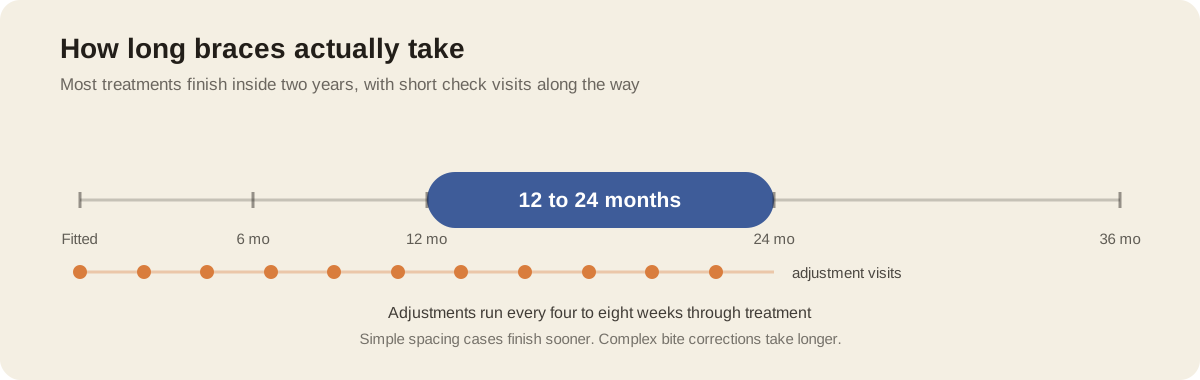
Once braces are fitted, adjustment visits happen roughly every four to eight weeks throughout treatment, and knowing what actually happens at each one helps set expectations for both parent and child. The dentist checks how the teeth have moved since the last visit, tightens or replaces wires and elastics as needed, and confirms treatment is tracking on schedule.
Most adjustment visits are quick, often fifteen to thirty minutes, and mild soreness for a day or two afterward is normal as the teeth respond to the new adjustment, similar to what happens after the initial fitting, just generally milder each time. For a child who has already been through the first fitting, subsequent visits are usually far less daunting once they know roughly what to expect.
Retainers After a Child’s Braces Come Off
Once active treatment ends, a retainer becomes part of daily life, and this is worth explaining to a child or teen before treatment even finishes, not as a surprise once the braces come off. Teeth have a natural tendency to drift back toward their original position without one, which is why retainers are treated as a required part of the overall treatment rather than an optional extra. Younger patients sometimes need encouragement to stay consistent with retainer wear once the novelty of finishing treatment has worn off, and involving them directly in understanding why it matters, protecting the result they just spent a year or more achieving, tends to work better than simply instructing them to wear it.
Braces and School Life: Sports, Instruments, and Eating
A few practical questions come up often once parents are past the initial cost of braces for kids question and are thinking about daily school life. Contact sports are still fine with braces, though a mouthguard designed to fit over braces is worth asking your dentist about, since a standard mouthguard often does not fit properly once brackets are in place. Wind instruments can feel different for the first week or two as a child adjusts to the brackets against their lips, but most students adapt quickly and continue playing normally. On eating, the main adjustment is avoiding hard, sticky, and very chewy foods that can damage brackets or wires, rather than any dramatic change to a child’s overall diet.
The Cost of Waiting Too Long

While there is flexibility in timing for most cases, waiting significantly past a recommended start age can occasionally make treatment more complex than it would have been. Crowding and bite issues do not resolve on their own as a child grows, and in some cases waiting allows a mild issue identified early to become a more involved correction by the time treatment eventually starts. This is not a reason to rush a child who genuinely is not ready, but it is a reason to take an early evaluation seriously rather than deferring it indefinitely, since the evaluation itself carries no obligation to start treatment immediately.
Questions Worth Asking at Your Child’s Evaluation
A few questions tend to get the most useful information out of a first evaluation. Is this an issue worth monitoring, or one that would genuinely benefit from earlier intervention. If we wait, what specifically are we watching for at the next check. And roughly what age range would full treatment likely fall into, based on what you can see today. A dentist willing to answer these specifically, rather than giving a vague general answer, is treating your child’s case individually rather than applying a generic script to every young patient who comes through the door. The right age for braces, in the end, is a conclusion your dentist reaches by watching your specific child’s teeth over time, not a number you can look up and apply universally.
What to Bring to Your Child’s First Evaluation
A little preparation makes the first visit smoother for everyone. Bringing along any previous dental X-rays, if your child has had any taken elsewhere, helps the dentist build a fuller picture without repeating unnecessary imaging. Jotting down any specific concerns beforehand, a tooth that seems crooked, a habit like thumb sucking that has continued longer than expected, or a comment a school dentist made, gives the evaluation a clear starting point rather than a general once-over. And preparing your child with a simple, honest explanation, that the dentist is just going to look and count teeth, tends to work better than over-explaining or, worse, avoiding the topic entirely beforehand.
How Genetics Factor Into the Right Age for Braces
Family history genuinely shapes timing more than most parents expect. If you or your child’s other parent needed braces, particularly at a young age, or dealt with a pronounced overbite, underbite, or crowding, your child has a meaningfully higher chance of needing similar correction, and sometimes benefits from an earlier first evaluation as a result. Jaw size and tooth size are both significantly inherited, and a mismatch between the two, a jaw too small for the teeth it needs to hold, is one of the most common reasons children need braces at all. Mentioning your own orthodontic history at your child’s first evaluation, even loosely, gives the dentist useful context for what to watch for over the following years.
Habits Worth Mentioning at Your Child’s Evaluation
A few common childhood habits are worth flagging to your dentist even if they seem minor. Prolonged thumb or finger sucking beyond the age most children naturally stop, tongue thrusting against the front teeth while swallowing, and mouth breathing rather than nose breathing can all influence how teeth and jaws develop over time. None of these guarantee a child will need braces, but they are exactly the kind of detail that helps a dentist decide whether a slightly earlier evaluation, or a specific type of monitoring, makes sense for your child specifically.
Why Parents Choose Elephant Dental Kiambu
Elephant Dental Kiambu is a KMPDC-registered dental practice on Biashara Street, with parents and patients consistently mentioning unhurried explanations, which matters especially for a child’s first dental visit. Every case, adult or child, is personally assessed by Dr. Winny, working within the wider Elephant Dental network. The clinic is open seven days a week, 8am to 5pm, including Sundays, which makes fitting evaluations and adjustment visits around school schedules more manageable.
Frequently Asked Questions About the Right Age for Braces
At what age should my child first see an orthodontist? The American Association of Orthodontists recommends a first orthodontic evaluation around age 7, well before braces themselves are usually needed, to catch developing issues early.
Does an early evaluation mean my child needs braces right away? No. In most cases, an early evaluation simply means monitoring development and knowing roughly when treatment, if needed, is likely to make sense as more permanent teeth come in.
What is the typical age to start full braces treatment? Full braces treatment most commonly starts between ages 11 and 14, once the majority of permanent teeth have come in, though this varies by individual case.
Is it ever too early or too late for braces in a child? There is flexibility on both ends. Some cases benefit from earlier, partial treatment to guide jaw development, and other children do well starting later once more teeth have erupted. A dentist’s assessment matters more than a fixed age, and this is precisely why the right age for braces varies so much from one family’s experience to another.
How much do braces cost for children in Kenya? Pricing is generally the same regardless of age. At Elephant Dental Kiambu, braces start from KSh 35,000 per jaw, with your own price confirmed at a consultation.
Book Your Child’s First Evaluation
You do not need to wait for a problem to become obvious. Message Elephant Dental Kiambu on WhatsApp to ask about booking your child’s first evaluation, and the team will talk you through what to expect, with no obligation to book anything further. You can also call 0143 178126 directly, or use the booking calendar on the clinic’s contact and directions page.
One Response