Teeth whitening price in Kenya ranges from roughly KSh 5,000 to KSh 60,000 for a full professional session, depending on the clinic, the whitening system used, and how many teeth are treated. At Elephant Dental Kiambu, whitening is priced per tooth at KSh 2,000, which works out to roughly KSh 20,000 to KSh 35,000 for a full visible smile, comfortably within the honest middle of that national range.
If you have been searching “teeth whitening price in Kenya,” you are likely trying to answer two things at once, what will this actually cost you, and is it safe for your teeth. This guide answers both directly, with real pricing and honest information about who whitening suits and who it does not, rather than a generic sales page.
Teeth Whitening Price in Kenya: Quick Reference Table
| Option | Price at Elephant Dental Kiambu | Typical Kenya market range |
|---|---|---|
| Whitening, per tooth | KSh 2,000 | Priced per session elsewhere, not usually per tooth |
| Full visible smile (approx. 8 to 10 teeth) | approx. KSh 20,000 to KSh 35,000 | KSh 5,000 to KSh 60,000 per session |
| In-clinic professional whitening | Included in above | KSh 15,000 to KSh 35,000 typical |
| Take-home whitening kits (dentist supervised) | Ask for a quote | KSh 5,000 to KSh 15,000 |
| Pre-whitening cleaning (recommended first step) | KSh 3,500 | KSh 3,000 to KSh 10,000 |
These figures are general guidance. Your exact whitening cost depends on how many teeth you want treated, your current tooth shade, and whether a cleaning is needed first to get an accurate read on your natural colour beneath any surface staining.
Three Things to Check Before Any Teeth Whitening
Before booking anywhere, not just at Elephant Dental Kiambu, three questions are worth asking. Does the quoted price cover a full arch or session, or is it priced per tooth the way it works here, since comparing a per-tooth price directly against a per-session price without doing the maths can be misleading in either direction. Is a cleaning included or recommended first, since stains sitting on the surface of your teeth from tartar can make your natural shade look darker than it actually is, and cleaning that away sometimes brightens teeth on its own before whitening even starts.
And does the clinic check your suitability for whitening before treatment, rather than assuming it applies to everyone equally. A clinic that walks you through these three points is treating your case individually rather than applying a flat price list to every patient. Check out our services page>>>
Whitening vs Bleaching: What the Terms Actually Mean
These two words get used interchangeably, but there is a real technical difference worth knowing. According to the American Dental Association, whitening refers broadly to any method that makes teeth appear brighter, which includes both removing surface stains and true bleaching. Bleaching specifically uses peroxide-based agents, hydrogen peroxide or carbamide peroxide, to change the natural colour of the tooth itself, going beyond simply removing what is sitting on the surface. Most professional in-clinic treatment, including what is offered at Elephant Dental Kiambu, is bleaching in this technical sense, not just surface stain removal, which is part of why it works on discoloration that a whitening toothpaste alone cannot touch.
What Affects Teeth Whitening Price in Kenya
A few honest factors explain why whitening prices vary so much between clinics. How many teeth are being treated matters directly, whether priced per tooth or per session, more teeth means more product and more chair time. The system used affects cost too, in-clinic bleaching with professional-strength gel generally costs more than a dentist-supervised take-home kit, though it also works faster and typically achieves a more even result across all teeth at once.
Location plays a role the same way it does for every dental treatment, clinics in high-rent commercial areas generally charge more for the same standard of care as a clinic with lower overhead. And your starting tooth shade and the cause of discoloration matter clinically, not just financially, since staining from coffee or tea generally responds differently to bleaching than intrinsic discoloration from an old injury or certain medications.
Who Should Not Get Teeth Whitening
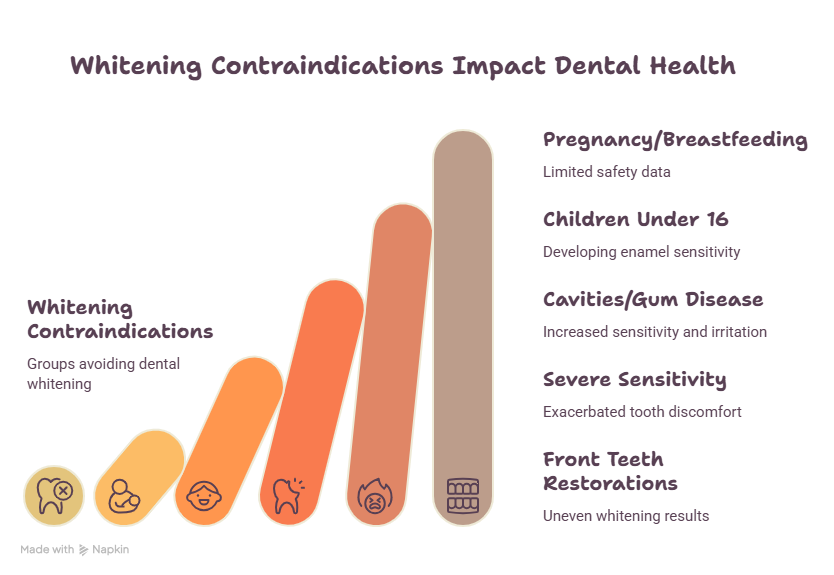
This is the section most price guides skip, and it matters. According to the American Dental Association and broader dental guidance, a few groups should avoid whitening or need dentist supervision before proceeding. Pregnant or breastfeeding women, since safety data specifically for this group is limited. Children under 16 to 18 depending on the guidance followed, since developing enamel responds differently to bleaching agents. Anyone with active cavities or gum disease, which should be treated first, since whitening agents can cause more sensitivity or irritation on already compromised teeth and gums. People with severe existing tooth sensitivity. And anyone with visible crowns, veneers, or large fillings on their front teeth, for a specific reason explained below.
Why Whitening Will Not Match Your Crowns or Fillings
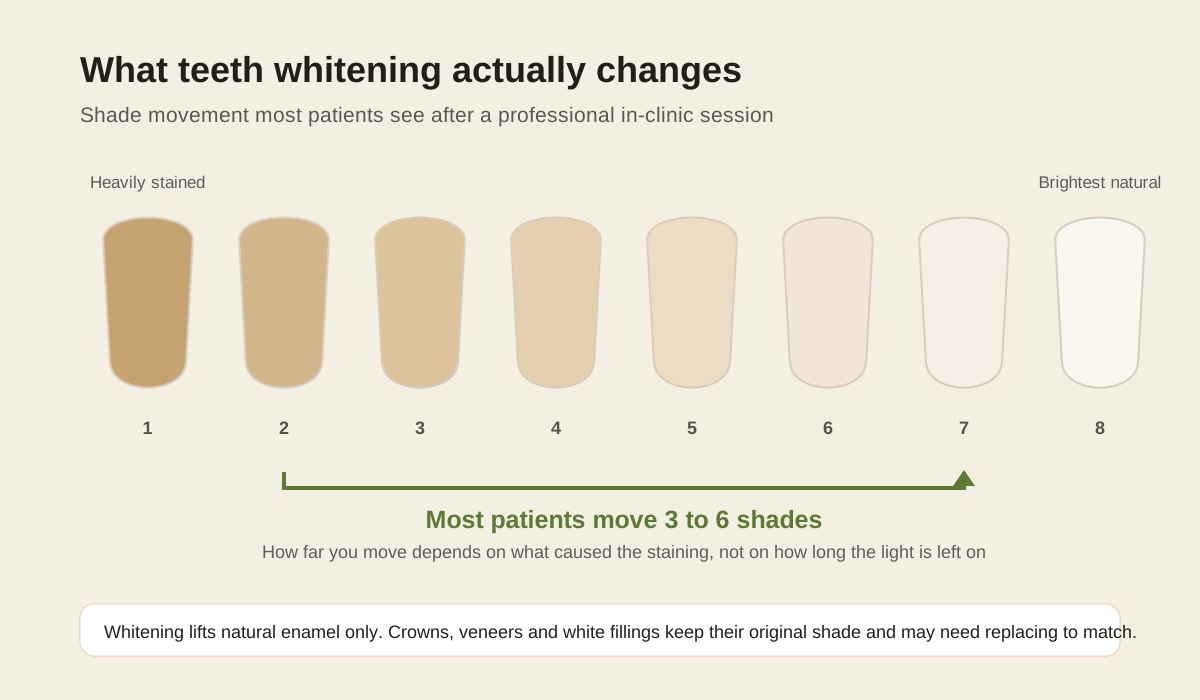
This is a genuinely important point that responsible clinics raise upfront rather than letting a patient discover it afterward. The American Dental Association is clear that only natural tooth enamel responds to whitening, crowns, veneers, bonding, and fillings do not change colour with bleaching treatment. If you have visible restorations on your front teeth, whitening your natural teeth around them can actually create a more noticeable colour mismatch rather than a more even smile. This is exactly why a proper exam before treatment matters, so you know what result to realistically expect rather than being surprised by mismatched teeth afterward.
Does Charcoal Whitening Actually Work
Charcoal-based whitening toothpaste and powders have become popular partly through social media, and it is worth knowing what the evidence actually shows. According to the American Dental Association, there is currently insufficient evidence that charcoal-based oral care products provide a measurable whitening benefit with adequate safety, despite their popularity. Charcoal products can also be abrasive enough with regular use to wear down enamel over time, which is the opposite of what most people are trying to achieve. If brightening your smile is the goal, a proper exam and professional treatment remains the more reliably effective route than a trending product with limited evidence behind it.
Teeth Whitening vs Teeth Cleaning: Which Do You Actually Need
Many people booking a “whitening” appointment actually need a cleaning first, or discover a cleaning alone brightens their smile more than expected. Teeth cleaning removes plaque, tartar, and surface staining from coffee, tea, or smoking sitting on top of your natural tooth colour. Whitening changes the actual shade of the tooth enamel beneath that surface layer.
If your teeth look duller than you would like mainly due to visible tartar or surface staining, a cleaning may resolve much of that on its own, at a lower cost than a full whitening treatment. If your teeth are genuinely a darker natural shade even after a clean surface, whitening is the treatment that actually addresses that. A good exam distinguishes between the two rather than defaulting to whichever is more expensive.
How Long Teeth Whitening Results Last
Results are not permanent, and how long they last depends heavily on your habits afterward rather than the treatment alone. Coffee, tea, red wine, and smoking are the most common causes of new staining building up over time. Most patients notice results lasting anywhere from six months to two years before a touch-up is worth considering, with professional in-clinic treatment generally lasting longer than at-home kits due to the higher concentration used. Simple habits, rinsing with water after staining drinks, brushing twice daily, and periodic professional cleaning, extend how long your results stay visible.
What Happens During a Professional Whitening Appointment
Knowing what actually happens tends to ease uncertainty for first time patients. The appointment starts with a check of your gums, teeth, and any existing restorations, confirming whitening is appropriate before anything else happens. Your gums and soft tissue are protected, since the bleaching gel is designed to work on enamel, not gum tissue. The whitening gel is then applied to your teeth and left to work for a set period, sometimes reapplied once or twice within the same visit for a stronger result. Most in-clinic sessions take around an hour from start to finish, and you can typically see the shade change immediately once the gel is removed and your teeth are rinsed.
Managing Sensitivity After Whitening
Mild sensitivity to hot or cold for a day or two after whitening is common and expected, not a sign anything went wrong. This happens because the bleaching process can temporarily make enamel slightly more permeable while it settles. Sticking to lukewarm foods and drinks for the first day, avoiding extremely hot or cold items, usually keeps this manageable. If sensitivity is more than mild or persists well beyond a couple of days, it is worth mentioning to your dentist, since this can sometimes mean the treatment needs adjusting for your specific teeth on future sessions.

Is In-Clinic Whitening Worth It Compared to At-Home Kits
This depends on what you value most. In-clinic professional whitening costs more upfront but works faster, achieves a more even result across all teeth simultaneously, and is performed under direct supervision that can catch and manage sensitivity in real time. At-home kits, even dentist-supervised ones, cost less but take longer to show results, typically two to four weeks of consistent use, and give you less control over an even result since you are applying the product yourself. Neither is objectively better for every patient, an in-clinic session suits someone preparing for an event with a tight timeline, while a take-home kit can suit someone comfortable with a slower, lower-cost approach. Our full professional vs at-home whitening comparison breaks this down in more detail.
A Quick Word on DIY Whitening Trends
Beyond charcoal products, a number of other DIY whitening trends circulate online, lemon juice, baking soda pastes, and various acidic rinses among them. Most of these work, if at all, by being abrasive or acidic enough to strip away surface staining, which also means they can wear down enamel with repeated use, sometimes making teeth look more yellow over time rather than whiter, since enamel wearing thin exposes the naturally more yellow dentin layer beneath it. A professional exam and treatment remains the more reliable and safer route to an actual, lasting shade change.
Does Teeth Whitening at Home in 2 Minutes Actually Work
Products and videos promising teeth whitening at home in 2 minutes circulate widely online, and it is worth being honest about what they can and cannot do. A genuine shade change from bleaching, whether professional or at-home, takes time because the peroxide needs sustained contact with the tooth to work, minutes of contact time per session at minimum, and usually multiple sessions over days or weeks for at-home products. Anything claiming a dramatic result in two minutes is generally either removing surface staining through abrasive polishing, which is a real but different effect from actual whitening, or making a claim the product cannot consistently deliver. A quick polish can genuinely make teeth look brighter by removing surface debris, which is worth knowing if that is actually what you are looking for, but it is not the same as changing your natural tooth shade.
Is Using Hydrogen Peroxide at Home for Whitening Safe
Hydrogen peroxide is the active ingredient in both professional and at-home whitening products, but using undiluted household hydrogen peroxide directly on your teeth, rather than a product formulated and concentration-controlled for dental use, is not recommended. Household hydrogen peroxide is typically a different concentration than dental products, and applying it without professional guidance risks irritating gums and soft tissue, with no way to control how much contact time is safe for your specific teeth. If you are interested in hydrogen peroxide based whitening, a dentist-supervised or reputable commercial product designed for oral use is the safer route than using a household bottle directly.
What the Price at Elephant Dental Kiambu Includes
The KSh 2,000 per tooth price covers the whitening treatment itself, applied by Dr. Winny rather than a generic technician. It is confirmed in writing before treatment starts, based on how many teeth you actually want treated, so you are not paying for a fixed package that does not match what you need. A recommended cleaning beforehand, priced separately at KSh 3,500, ensures the treatment works on your genuine tooth colour rather than surface tartar that a cleaning would have removed anyway.
Comparing teeth whitening price in Kenya across a few clinics is worth doing, provided each quote is confirmed after an actual exam.
Setting Realistic Expectations for Your Results
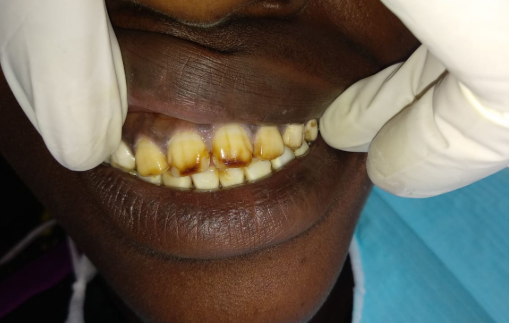
How many shades lighter your teeth get depends on your starting shade and the cause of discoloration, not a fixed number every patient can expect. Staining from coffee, tea, or smoking generally responds well to whitening, often producing a noticeable, satisfying change. Discoloration caused by certain medications taken during childhood, or by an old injury to a specific tooth, tends to respond less predictably and sometimes needs a different approach entirely, such as teeth masking rather than whitening. A dentist who gives you an honest, case specific expectation before treatment, rather than a universal promise, is the one worth trusting with your smile.
Can Yellow Teeth Go White Again?
In most cases, yes, yellow teeth can go white again. Yellowing usually comes from surface stains left by tea, coffee, soda, and smoking, and these respond well to professional whitening. There is an important exception though: if a tooth is yellow or grey because of its inner structure, from certain medicines taken in childhood, from ageing, or from a tooth that has died, whitening works less predictably, and the dentist will tell you honestly at your consultation whether your particular yellowing will lift. How long it takes to reverse yellow teeth depends on the method, but a single professional in-clinic session usually produces a visible change the same day, while at-home trays take one to two weeks of daily use.
Which Teeth Cannot Be Whitened?
Whitening only works on natural tooth enamel, so some teeth will not respond, and knowing this before you pay matters. Crowns, veneers, fillings, and bridges do not whiten at all, because they are made of materials that hold their colour, which is why whitening can leave them looking different from the teeth around them. Teeth that are stained from the inside rather than the surface, such as those affected by certain antibiotics or by injury, whiten unevenly if at all. And teeth with untreated decay or gum problems need that treated first. This is exactly why a consultation comes before whitening, so nobody pays for a result their teeth cannot give.
What Is Black Tartar and Can Whitening Remove It?
Black tartar is hardened deposit near and below the gumline, often darker than ordinary tartar, and whitening does not touch it. Whitening changes the colour of enamel; it cannot remove a physical deposit stuck to the tooth. Black tartar has to be removed by a dental cleaning, sometimes called scaling, and only after that cleaning is done does whitening make sense, on teeth that are actually clean. If your main concern is dark deposits rather than a yellow shade, what you likely need first is a professional teeth cleaning, and the dentist will advise whether whitening is worth adding afterward.
What Is the 2-2-2 Rule for Teeth?
The 2-2-2 rule is a simple memory aid for keeping teeth healthy and white: brush 2 times a day, for 2 minutes each time, and visit the dentist every 2 (to six) months for a check up and cleaning. Some versions read it as twice a day, two minutes, twice-yearly dental visits. Whichever way you count it, the point is the same, consistent brushing plus regular professional cleaning is what keeps whitening results looking good and stops new stains hardening into tartar. It is the cheapest way to protect any whitening you pay for.
Teeth Whitening at a Dental Clinic Along Kiambu Road
If you have been searching for a dental clinic along Kiambu Road for teeth whitening, Elephant Dental Kiambu is on Biashara Street in Kiambu town, a short and familiar trip for anyone living or commuting along the Kiambu Road corridor, from Ruaka and Banana up through Kiambu town itself. Getting your whitening done locally rather than in central Nairobi means the follow up and any touch ups are minutes away, and the price is confirmed in writing after a consultation rather than quoted blind. The clinic is open seven days a week, including Sundays, so an appointment fits around work.
Why Patients Choose Elephant Dental Kiambu for Teeth Whitening
Elephant Dental Kiambu is a KMPDC-registered dental practice on Biashara Street, with patients consistently mentioning unhurried explanations and visible sterilisation between patients. Every whitening case is personally assessed by Dr. Winny before treatment begins, which includes checking whether whitening is actually suitable for your teeth rather than assuming it is, working within the wider Elephant Dental network. Every step is explained clearly before it happens, including honest expectations about what shade change is realistic for your specific teeth.
The clinic is open seven days a week, 8am to 5pm, including Sundays, at Kikinga House on Biashara Street, a short walk from Kiambu Town Main Stage.
Frequently Asked Questions About Teeth Whitening Price in Kenya
How much does teeth whitening cost in Kenya? Teeth whitening price in Kenya typically ranges from KSh 5,000 to KSh 60,000 for a full professional session, depending on the clinic and system used. At Elephant Dental Kiambu, whitening is priced per tooth at KSh 2,000.
Is teeth whitening safe? Professional teeth whitening performed by a dentist is generally safe according to the American Dental Association, though it is not suitable for everyone, including pregnant women, young children, and people with active gum disease or cavities that need treating first.
Will whitening match my crowns or fillings? No. Only natural tooth enamel responds to whitening treatment. Crowns, veneers, bonding, and fillings do not change colour, which can create a visible mismatch if you have visible restorations on your front teeth.
Do I need a cleaning before whitening? Often yes. Surface staining from tartar, coffee, or tea can make teeth look darker than their actual natural shade, and a cleaning sometimes brightens teeth noticeably on its own before whitening even begins.
How long does teeth whitening last? Most patients see results lasting six months to two years, depending on habits like coffee, tea, and smoking, with professional in-clinic treatment generally lasting longer than at-home kits.
Can yellow teeth go white again? Usually yes. Surface yellowing from tea, coffee, soda, and smoking responds well to professional whitening. Yellowing from inside the tooth, from age or certain medicines, is less predictable, which a consultation will clarify.
Which teeth cannot be whitened? Crowns, veneers, fillings, and bridges do not whiten, and teeth stained from the inside whiten unevenly. Teeth with untreated decay or gum problems need treating first. Only natural enamel responds to whitening.
How long does it take for teeth to whiten? A single in-clinic session usually gives a visible result the same day, while at-home trays take one to two weeks of daily use to reach a similar shade.
What is the 2-2-2 rule for teeth? Brush twice a day, for two minutes each time, and see a dentist regularly for check ups and cleaning. It is a simple way to protect whitening results and prevent new stains and tartar.
The Bottom Line on Teeth Whitening Price in Kenya
A fair whitening price reflects an honest exam, a treatment matched to your actual teeth, and a clear explanation of what result to expect, not just the lowest number on a list. Comparing clinics on price alone, without knowing whether that price includes a proper consultation or accounts for your specific tooth shade, tends to lead to disappointment regardless of how affordable the initial quote looked.
Get an Honest Whitening Price for Your Teeth
You do not need to guess whether whitening is right for you. Message Elephant Dental Kiambu on WhatsApp and describe what you are looking for, and the team will give you an honest first read, with no obligation to book anything further. If it makes sense to move forward, the next step is a full oral exam, which confirms whether whitening suits your teeth and gives you a fixed, written price. You can also call 0143 178126 directly, or use the booking calendar on the clinic’s contact and directions page.
Looking to book rather than compare? Our teeth whitening in Kiambu page sets out what the treatment includes, what happens at the appointment and how to book.
Ask About Whitening Price on WhatsAppLooking at other dental treatment costs? Our guide to the braces price in Kenya breaks down orthodontic pricing the same honest way.