Braces for adults in Kenya are common and effective, and age by itself is rarely a barrier to treatment. According to the American Association of Orthodontists, roughly one in three orthodontic patients today is an adult, a figure that has climbed steadily as more people choose to correct long standing dental concerns later in life. If you have been putting off braces because you assumed it was too late, the short answer is that it usually is not.
Table of Contents
Table of Contents
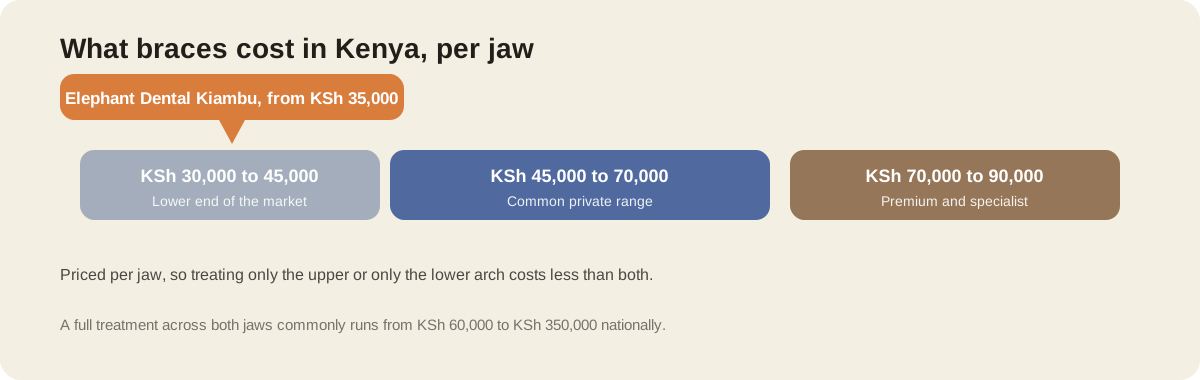
On cost and timelines, the quick picture looks like this. Adult braces in Kenya generally range from around KES 70,000 to over KES 300,000 for a full treatment depending on the type of braces, while treatment at Elephant Dental Kiambu starts from KSh 35,000 per jaw with adjustment visits included, and your exact price is only ever confirmed after a consultation. Most adult treatments run 18 to 30 months. The rest of this guide covers who adult braces suit, what changes with age, what they cost across Kenya, and how SHA and insurance fit into the picture.
Is 20, 30, or 40 Too Late for Braces?
No age in your twenties, thirties, or forties is too late for braces, and there is no upper age limit for orthodontic treatment. At 20, your treatment will look almost identical to a teenager’s, since bone at that age still responds quickly to orthodontic pressure. In your thirties and forties, teeth move a little more gradually because the jawbone has fully matured, but the end result is the same, the treatment simply may take a few months longer. Even patients in their fifties and sixties complete braces treatment successfully, provided their gums and bone support are healthy, which is exactly what the initial oral examination checks. The honest limiting factor for adult braces is gum health, not the number of birthdays you have had.
Three Questions Adults Should Ask Before Starting Braces
Before booking a consultation, it helps to think through three questions specific to adult treatment. How will braces fit around your work and social commitments, including the visibility of metal brackets during that time. Do you have any prior dental work, such as crowns, bridges, or missing teeth, that your dentist should factor into planning. And how much does discretion matter to you personally, since that will shape whether traditional braces, ceramic braces, or clear aligners is the better fit. Most adults already have a strong instinct about at least one of these three questions, the exam is where the other two get answered properly.
Are You a Good Candidate for Adult Braces
Age itself is not the deciding factor, your dentist is really checking a few specific things. Healthy gums, since active gum disease generally needs treating first before braces begin. Adequate bone support around your teeth, checked during the exam. No untreated tooth decay that needs addressing before movement starts. Beyond that, most adults with reasonably healthy teeth and gums are candidates, regardless of whether this is your first time in braces or a second round after teeth shifted following treatment as a teenager.
What Is Actually Different About Braces for Adults
The mechanism of braces works the same way regardless of age, steady pressure moving teeth over time. What differs for adults is mainly practical. Adult jawbones have finished growing, so movement sometimes takes slightly longer than it would for a teenager whose bone is still developing, though this varies significantly by case. Adults are also more likely to have prior dental work, fillings, crowns, or missing teeth, that needs to be accounted for in treatment planning, which is part of why a thorough oral examination matters more, not less, for adult patients. None of this makes braces for adults in Kenya less effective, it simply means the plan is built around your specific dental history rather than a generic template.
Braces for Adults vs Teenagers: What Actually Changes
The comparison comes up constantly, so it is worth laying out plainly. Teenagers typically wear braces 12 to 24 months because developing bone responds quickly to pressure, while adults average 18 to 30 months for a comparable case, a difference of biology rather than effectiveness, covered in more detail in our guide to how long braces take. Adults also tend to choose differently, ceramic braces and clear aligners are far more popular among working adults for discretion, while teenagers mostly wear traditional metal. Where adults hold a genuine advantage is compliance, adult patients are generally more disciplined about oral hygiene, elastics, and attending adjustment visits, which is precisely the behaviour that keeps a treatment on schedule. In practice, the adult disadvantage of slower bone movement and the adult advantage of better compliance often roughly cancel out.
Cost of Braces for Adults in Kenya
The price of braces for adults is generally the same as for any other patient, but the range across Kenya is wide, so it helps to understand it in broad strokes rather than fixed figures. Traditional metal braces generally range from around KES 70,000 upward for a full treatment, ceramic braces typically start higher, clear aligners start higher still, and lingual braces, fitted behind the teeth, are usually the most expensive option. Consultation fees generally start from around KES 1,000. No published range replaces an actual assessment though, the only reliable way to know what your own treatment will cost is to have your teeth examined first, since the figure depends entirely on your case.
At Elephant Dental Kiambu, traditional metal braces start from KSh 35,000 per jaw, a price that includes the fitting and every adjustment visit through the full length of treatment, without billing visit by visit as treatment progresses. Your exact figure is confirmed in writing after an oral examination. See the full braces price breakdown for what is included. Where cost can differ is treatment length, since a more involved case, sometimes more common in adults with longstanding untreated issues, can mean more adjustment visits across a longer treatment, which is exactly why a price that already includes those visits protects your budget.
Can SHA or Insurance Pay for Adult Braces?
This is one of the most common questions adults ask, and the honest answer as of 2026 is that SHA does not generally cover braces, because orthodontic treatment is classified as cosmetic rather than medically essential in most cases, with limited exceptions under some comprehensive schemes. If you hold SHA cover, it is still worth confirming your specific situation directly with SHA before ruling it out. Private medical insurance is a different story, some employer dental schemes in Kenya include a partial orthodontic benefit, so check your specific policy documents or ask your HR team before assuming braces are entirely out of pocket. Where insurance does not apply, the clarity of a fixed, written price upfront becomes even more important, since it lets you plan the full cost of treatment against your own budget rather than discovering additional charges partway through, which is part of why the pricing structure at Elephant Dental Kiambu includes every adjustment visit within the original quote.
Payment Plans and Budgeting for Adult Braces
Because braces treatment runs across many months, paying for it is naturally spread across time in a way a single procedure is not. Across Kenyan clinics, the common structure is a deposit at fitting followed by instalments across the treatment period, and it is completely reasonable to ask any clinic you are considering exactly how payments are structured before committing. At Elephant Dental Kiambu, the full price is quoted in writing after your oral exam with every adjustment visit already included, so there are no per visit charges accumulating as the months pass, and you can ask about payment arrangements directly on WhatsApp before booking anything.
Discreet Options for Adult Patients
Discretion is often the biggest concern adults raise, more than cost or discomfort. A few options exist for patients who want a less visible treatment. Ceramic braces use tooth coloured brackets that blend in far more than traditional metal, covered in our full comparison of brace types and cost. Clear aligners are nearly invisible and removable, which suits many working adults well for mild to moderate cases, explained fully in our braces vs clear aligners comparison. Traditional metal braces remain the most affordable and often the most effective option for more complex adult cases, even though they are the most visible of the three.
An Illustrative Example
This is an illustrative example to make the decision concrete, not a real patient case. Consider an adult in their thirties with mild crowding on the lower front teeth that has gradually worsened over the years, working in a client facing role with regular video calls. For a case like this, the crowding is often mild enough that either ceramic braces or clear aligners would be a reasonable fit, and the decision usually comes down to budget against how much the visibility of ceramic brackets would bother them during the treatment period, a genuinely personal call rather than a clinical one.
Before and After: What Results Can Adults Expect
Adults searching for before and after results usually want to know two things, how quickly change becomes visible and whether the final result matches what a teenager would get. On the first, most patients see the first visible movement in their front teeth within 4 to 6 weeks of fitting, with the difference becoming obvious to other people somewhere around the third to sixth month. On the second, the final alignment an adult achieves is clinically equivalent to what the same case would achieve at sixteen, the route there is simply a little longer. The result is then protected by the retainer phase, worn full time at first and at night onward, which is what stops teeth drifting back toward their old positions and keeps your after photo looking the way it did on removal day.
Common Concerns About Braces for Adults, Addressed Honestly
A few concerns come up often enough to address directly. Some adults worry treatment will simply take too long to be worth starting. In practice, the years pass regardless of whether treatment is started, and most adults who begin treatment say afterward that they wish they had started sooner rather than later. Others worry braces will look unprofessional at work. Ceramic and clear aligner options exist specifically for this concern, and even traditional metal braces are increasingly common enough among adults that they draw far less attention than most people expect.
Why More Adults Are Starting Treatment Now Than Ever Before
The rise in adult orthodontic treatment is not a passing trend, it reflects a genuine shift in how people think about the investment. For many adults, the decision comes down to a straightforward comparison, weigh a fixed, one time treatment cost against years of living with a smile they have felt self conscious about, whether in professional settings, photos, or simply day to day confidence. Many adults who start treatment describe the same regret, that they wish they had done it years earlier rather than waiting for a more convenient time that never quite arrived. There is rarely a perfectly convenient time to start treatment, work, family, and other commitments do not pause conveniently for anyone, which is part of why waiting for the ideal moment often means waiting indefinitely.
Fitting Treatment Around a Working Adult Schedule
A common hesitation for adults is not the treatment itself but fitting adjustment visits around work. In practice this is more manageable than most people expect. Adjustment visits are typically scheduled every six to ten weeks and are usually short appointments, not the longer sessions needed for the initial fitting or final removal. A clinic open seven days a week, including weekends, makes this considerably easier, since adjustment visits can often be scheduled without needing time off work at all. It is worth asking any clinic you are considering directly about appointment flexibility before assuming braces will be difficult to fit around your schedule.
What Adult Patients Say Matters Most in Choosing a Clinic
Beyond price, adult patients considering braces consistently raise a few priorities during consultations. Being told honestly whether their case suits a more discreet option like ceramic braces or clear aligners, rather than being upsold toward the more expensive option regardless of fit. Having their prior dental work, existing crowns, fillings, or a missing tooth, genuinely factored into the plan rather than treated as an afterthought. And being able to ask questions between visits without waiting weeks for the next scheduled appointment. These priorities matter more to most adult patients than shaving a small amount off the headline price.
Budgeting properly for braces for adults in Kenya means looking beyond the headline price to the full course of treatment.
Braces for Adults in Kiambu
Adults in Kiambu do not need to book a Nairobi clinic to have orthodontic treatment assessed properly. At Elephant Dental Kiambu on Biashara Street in Kiambu town, adult cases are assessed seven days a week, including Sundays, which matters for working adults whose weekdays are spoken for, and every option from traditional metal braces to the more discreet alternatives is weighed against your actual case at the examination rather than sold from a list. For the many adults who commute down Kiambu Road into Nairobi each day, past Ridgeways and Muthaiga, treatment at home in Kiambu also means adjustment visits on quiet weekend mornings instead of fighting evening traffic to a clinic in town, an eighteen month convenience that is easy to underestimate on day one.
Why Patients Choose Elephant Dental Kiambu
Elephant Dental Kiambu is a KMPDC-registered dental practice on Biashara Street, with patients consistently mentioning unhurried explanations and visible sterilisation between patients. Every adult case is personally assessed by Dr. Winny, with your prior dental history properly accounted for in the treatment plan, working within the wider Elephant Dental network. The clinic is open seven days a week, 8am to 5pm, including Sundays, making it easier to fit adjustment visits around a working schedule, whether you are in Kiambu town itself or commuting from the wider Kiambu and Nairobi area.
Deciding on braces for adults in Kenya is easier with the full picture in front of you. If you are still weighing the discomfort, our guide to whether braces hurt walks through each stage honestly, and if you are choosing between a visible and a discreet option, the braces vs clear aligners comparison is the natural next read. Above all, since adults are a prime target for cheap online offers, remember that unlicensed fashion braces are never a safe shortcut to the smile you want.
Frequently Asked Questions About Braces for Adults in Kenya
Where can adults get braces in Kiambu? Adult braces cases are assessed at Elephant Dental Kiambu on Biashara Street in Kiambu town, seven days a week including Sundays, with every option from metal braces to discreet alternatives weighed at an oral examination.
Is it too late to get braces as an adult? No. Age by itself is rarely a barrier to braces treatment, and according to the American Association of Orthodontists, roughly one in three orthodontic patients today is an adult.
Is 20 too late for braces? No. At 20, bone still responds quickly to orthodontic pressure and treatment looks almost identical to a teenager’s. There is no upper age limit for braces at any adult age, provided gums and bone support are healthy.
Is 25 too late for braces? Not at all. Mid twenties is still well within the range where orthodontic treatment works predictably, bone remodelling slows gradually with age rather than stopping at any specific birthday. Most patients in their mid twenties see treatment timelines very similar to a teenager’s.
How long do adults get braces for? Adults typically wear braces 18 to 30 months, slightly longer than teenagers, because fully matured bone moves more gradually. Milder adult cases can finish inside a year.
Can SHA pay for my braces? Generally no, as of 2026 SHA does not cover braces in most cases because orthodontic treatment is classified as cosmetic, with limited exceptions under some comprehensive schemes. Some private employer dental policies include partial orthodontic benefits, so check your specific cover.
Do braces take longer for adults than for teenagers? Sometimes, since adult jawbones have finished growing, though this varies significantly by case and is more influenced by the complexity of the correction needed than by age alone.
What is the least visible braces option for adults? Clear aligners are the least visible option, followed by ceramic braces, which use tooth coloured brackets. Traditional metal braces are the most visible but often the most affordable and effective for complex cases.
Does having crowns or fillings affect adult braces treatment? Prior dental work is factored into the treatment plan during your oral examination, and generally does not prevent braces treatment, though it may influence the approach taken.
How much do braces cost for adults in Kenya? Prices in Kenya generally range from around KES 70,000 to over KES 300,000 for a full treatment depending on the type of braces. At Elephant Dental Kiambu, treatment starts from KSh 35,000 per jaw with adjustment visits included, and the exact price is confirmed at a consultation.
Ask Whether It Is Too Late for You
The only way to know for certain is to ask about your actual teeth, not a general rule. Message Elephant Dental Kiambu on WhatsApp and describe your situation, and the team will give you an honest first read, with no obligation to book anything further. If it makes sense to move forward, the next step is a full oral exam at KSh 6,500. You can also call 0143 178126 directly, or use the booking calendar on the clinic’s contact and directions page.
Adult treatment is common rather than unusual. The American Association of Orthodontists notes there is no upper age limit for moving teeth, and that most patients wear braces for twelve to twenty four months whatever their age.
2 Responses