Do braces hurt, or put differently, are braces painful? For most patients, braces cause pressure and mild soreness for two to four days after the initial fitting and after each adjustment visit, not sharp or ongoing pain. This discomfort is a normal sign that your teeth are responding to treatment, not a sign that anything has gone wrong. This guide walks through exactly what to expect at each stage, so you know what is normal and what is worth calling the dentist about.
Table of Contents
Why Do Braces Hurt? What Is Actually Happening in Your Mouth
To understand why do braces hurt at all, it helps to know how they work. Braces work by applying steady, gentle pressure to your teeth over time, which gradually moves them into position. That pressure is what creates the soreness patients feel, not damage to the tooth or gum. The sensation is usually described as a dull ache or tenderness, similar to mild pressure, rather than a sharp or stabbing pain. If what you are feeling is sharp, sudden, or getting worse rather than better, that is different from ordinary adjustment soreness and worth mentioning to your dentist.
Will Braces Hurt When They First Go On? A Day by Day Account
The fitting appointment itself is not painful, since no pressure has been applied yet at that point. Soreness typically begins several hours later, once the archwire starts working, and tends to peak around day two or three. On a simple zero to ten scale, most patients describe this initial soreness as somewhere around a four or five, a dull, manageable ache rather than anything sharp.
Adjustment visits later in treatment tend to feel milder by comparison, often closer to a two or three. Eating can feel a little different during this window, softer foods are usually more comfortable, and the inside of your cheeks and lips may feel slightly irritated as they adjust to the brackets, which usually settles within a week or two as the mouth gets used to the new hardware.
What to Expect After Each Adjustment Visit
After each adjustment visit, roughly every six to ten weeks according to guidance from the American Association of Orthodontists, it is common to feel a milder version of that same pressure soreness for a day or two, since the archwire has been tightened or changed to continue guiding your teeth. This tends to be less intense than the initial fitting soreness and settles faster each time as your mouth becomes more accustomed to the process.
How Painful Are Braces on a Scale of 1 to 10?
Patients who are asked to put a number on it usually land between three and five out of ten for the first two days after a fitting, and one or two by day four or five. After a routine adjustment the number is lower again, around two or three, and it fades within a day or two rather than a week. A useful comparison is a mild tension headache: present enough to notice while you are eating or concentrating, not enough to stop you working or sleeping.
That range is an average, and averages hide people. A minority of patients report six or seven in the first forty eight hours, usually those with significant crowding, because more movement is being asked of the teeth at once. Pain tolerance also varies enormously between individuals, and how much sleep you had the night before genuinely changes the number you would give. None of that means anything has gone wrong. What would mean something has gone wrong is a number that climbs after day three instead of falling, or pain that is sharp and pinned to one tooth rather than a general ache across the arch.
The honest summary is that braces are uncomfortable rather than painful, and the discomfort is measured in days rather than weeks. Almost nobody describes it afterwards as the worst part of treatment. Most people name the food restrictions instead.
How Much Do Braces Hurt Compared With a Filling or an Extraction?
This is the comparison most people are really making when they ask the question, because dentistry is the reference point they already have. The three feel completely different, and braces come out of the comparison well.
A filling involves local anaesthetic, so you feel pressure and vibration during the appointment but no pain. Afterwards there may be sensitivity to cold for a few days. An extraction is also done under anaesthetic, with real soreness for two to five days afterwards as the socket heals, and that soreness is more intense than anything braces produce. A root canal is the procedure people fear most, though in practice it usually relieves pain rather than causing it.
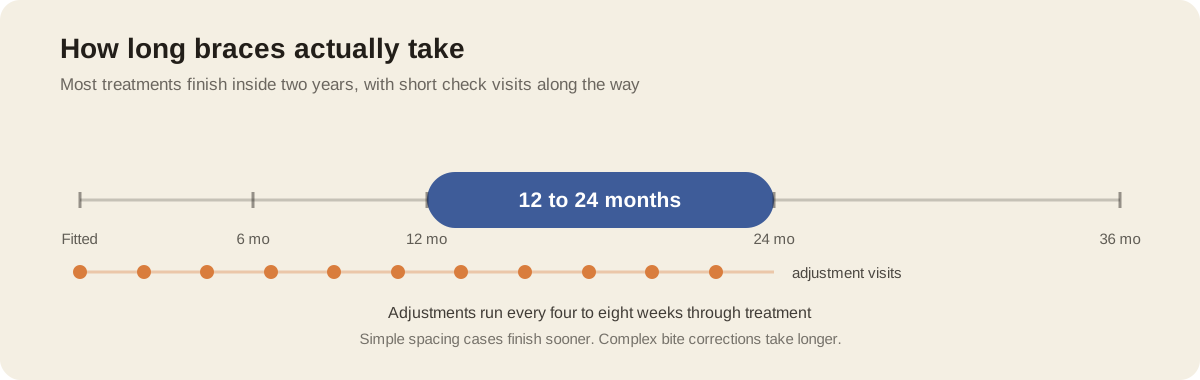
Braces sit apart from all three because no anaesthetic is used and nothing is cut, drilled or removed. The fitting appointment itself is not painful at all, which surprises people. What braces have instead is duration: a low level ache that returns briefly after every adjustment for as long as treatment lasts, which our guide to how long braces take puts at twelve to twenty four months for most patients. So the trade is intensity for repetition. Braces never reach the peak discomfort of an extraction, but they ask for a small amount of tolerance many times over.
How to Manage Discomfort Safely
A few simple, standard approaches make the sore days more comfortable. Over the counter pain relief, taken as directed, is generally enough to manage adjustment soreness for most patients. Softer foods for the first few days after a fitting or adjustment reduce the strain on teeth that are already sensitive. A warm salt water rinse can soothe general soreness in the mouth.
If a bracket or wire is irritating the inside of your cheek, a small amount of orthodontic wax placed over the spot creates a smooth barrier until your next visit. None of this should involve anything beyond these standard, dentist recommended steps, if discomfort feels beyond ordinary soreness, that is a reason to contact the clinic rather than try to manage it yourself.
When Braces Pain Is Not Normal
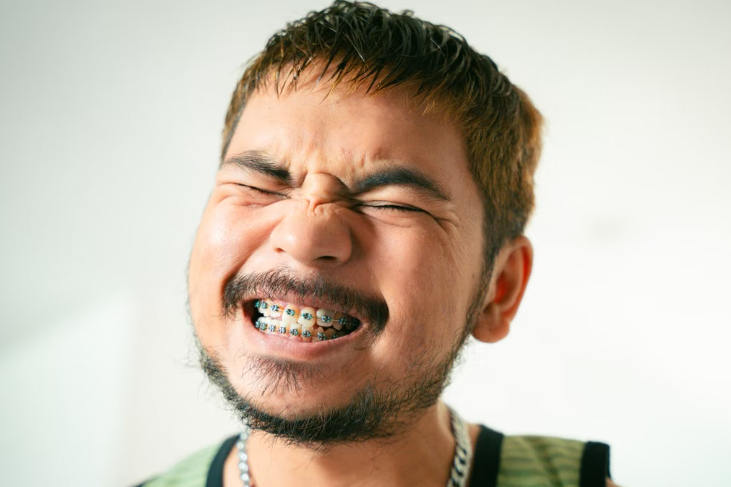
Most discomfort with braces is mild and temporary, but a few signs are worth contacting your dentist about rather than waiting out. Sharp, localised pain that does not ease with over the counter relief. A bracket or band that has come loose or broken. A wire that is poking sharply into your cheek or gum and cannot be managed with wax. Any sign of infection, such as swelling, unusual redness, or a fever. These are not common, but if any of them happen, reaching out promptly is the right move rather than waiting for your next scheduled visit.
Does Getting Braces Off Hurt
Removing braces is generally not painful, patients typically describe it as a strange sensation of pressure rather than pain, since the brackets are simply released from the tooth surface. Some mild sensitivity afterward is normal as your teeth adjust to being free of the hardware, and this settles quickly.
Do Some Types of Braces Hurt More Than Others?
Not meaningfully. Traditional metal braces, ceramic braces, and self ligating braces all work on the same pressure based mechanism, so the day to day soreness pattern is broadly similar across types. Our comparison of brace types and cost covers the differences that do matter, mainly visibility and price, if you are still deciding which type to choose. Clear aligners are sometimes described as slightly more comfortable day to day since there are no metal brackets against the cheeks, covered in our braces vs clear aligners comparison.
Do Brackets Hurt, or Is It the Wire That Does the Work?
The brackets and the wire do two different jobs, and they cause two different sensations. Brackets are the small squares bonded to the front of each tooth. They do not move anything on their own. They are anchor points, and the archwire threaded through them is what applies the force that shifts your teeth. So the deep, dull ache across the whole arch after a fitting or an adjustment comes from the wire, not the brackets.
What brackets cause is a separate and much more superficial problem. For the first week or so, their edges rub against the soft tissue inside your lips and cheeks, which has never had anything hard sitting against it before. That produces surface irritation and sometimes small ulcers, and it is the complaint that brings most people back to the clinic in week one. It resolves on its own as the tissue toughens up, usually inside ten to fourteen days, and orthodontic wax over the offending bracket makes the wait tolerable.
The practical difference matters. Ache from the wire is expected and passes in days. A bracket that is catching the same spot repeatedly, or one that has come loose and is rotating, is worth a visit rather than more wax, because a loose bracket also stops that tooth being moved at all.
Is Getting Braces Sore, or Is Most of It Nerves?
It is worth separating two different things that often get bundled together under “does it hurt.” One is the physical pressure and soreness described throughout this guide, which is mild, temporary, and well understood. The other is the anxiety some patients, especially first timers, feel about the unknown of a dental procedure, which is a completely different and equally valid concern that has little to do with actual physical pain.
If what is worrying you is more the uncertainty of what will happen than the discomfort itself, that is worth saying directly at your consultation, since a good dentist will walk you through exactly what to expect rather than assuming physical pain is the only concern on your mind.
Knowing exactly when do braces hurt the most during that first week helps you plan around it rather than be caught off guard.
A Realistic Week One Timeline
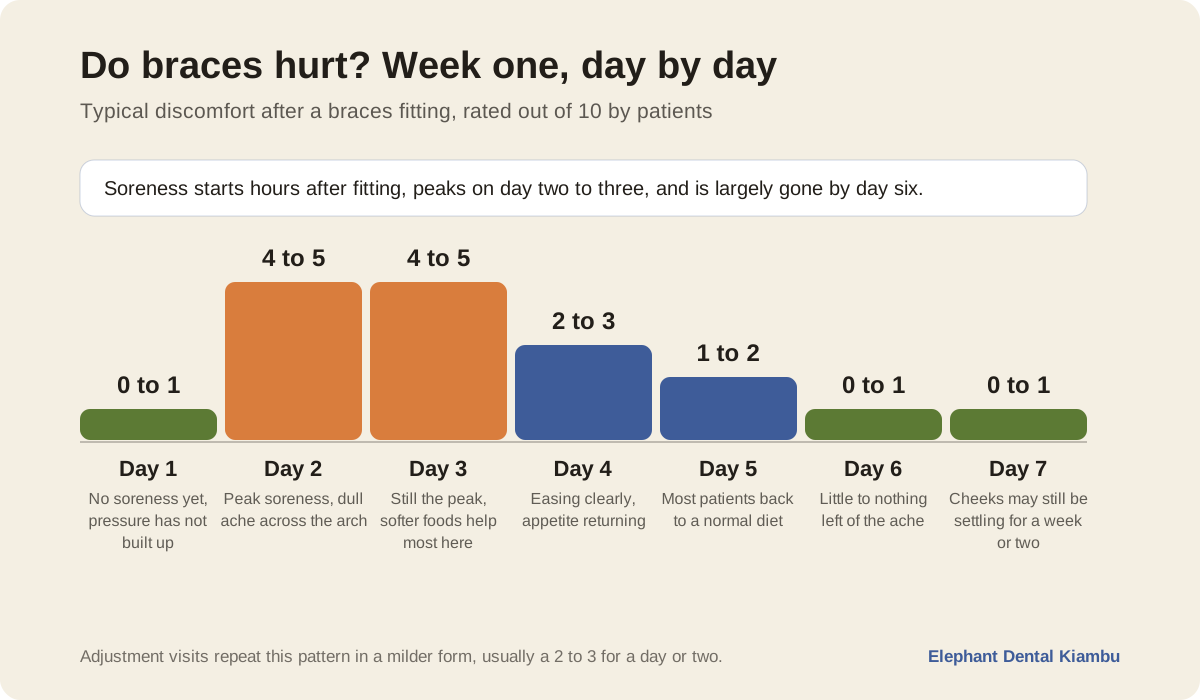
To make this concrete, here is roughly what the first week after a braces fitting typically looks like. Day one, no discomfort yet, since pressure has not built up. Day two to three, the peak of soreness, generally manageable with over the counter pain relief and softer foods. Day four to five, discomfort noticeably easing, most patients are back to a fairly normal diet by this point. Day six to seven, minimal to no soreness remaining until the next adjustment visit, though the inside of the cheeks may still be adjusting to the brackets for a week or two longer. This pattern repeats, in a milder form, after each subsequent adjustment throughout treatment.
Do Braces Hurt More the Second Time You Get Them
Some adults getting braces for a second time, perhaps after not wearing a retainer following childhood treatment, wonder whether the experience will be worse the second time around. It is generally not. The mechanism and the pattern of soreness are the same regardless of whether it is your first or second time with braces, and many adults report feeling less anxious the second time simply because they already know what to expect, even if the physical sensation itself is unchanged.
A common follow-up question once people understand do braces hurt is whether food choices make any real difference to that discomfort.
Does Diet Affect How Much Braces Hurt
What you eat during the sore first few days after a fitting or adjustment can genuinely affect how uncomfortable that period feels, separate from the underlying soreness itself. Sticking to softer foods during the peak soreness window, roughly day two to three, avoids putting extra pressure on teeth that are already tender from the archwire. This is different from the longer term list of foods to avoid for the sake of protecting brackets and wires throughout treatment, covered in our full guide to foods to avoid with braces, this is specifically about comfort during the few sorest days after each visit, not a permanent restriction.
Are braces painful? Not in the way people often expect. Braces cause pressure and mild soreness for a few days after fitting and each adjustment, not the sharp or constant pain the word “painful” implies. Most patients manage it with over the counter pain relief and softer foods for a few days.
Getting Help With Braces Discomfort in Kiambu
Most braces soreness is normal and passes on its own, but the exceptions, a wire poking your cheek, a loose bracket, pain that sharpens instead of fading, need prompt attention, and this is where having your clinic nearby genuinely changes the experience of wearing braces.
Patients at Elephant Dental Kiambu can message the clinic on WhatsApp between visits and be seen on Biashara Street in Kiambu town any day of the week, including Sundays, rather than enduring a poking wire until a weekday slot opens at a clinic across the county. For anyone in Kiambu town or nearby, from Ndumberi to Riabai to the Ruaka side, that turns the worst moments of braces, which are almost always small mechanical problems rather than real emergencies, into a same day fix minutes from home.
Why Patients Choose Elephant Dental Kiambu
Elephant Dental Kiambu is a KMPDC-registered dental practice on Biashara Street, with patients consistently mentioning how unhurried the explanations are, which matters most for a first time patient who is anxious about what to expect. Every case is personally assessed by Dr. Winny, and questions between visits can be sent directly over WhatsApp rather than waiting for the next scheduled appointment. Every step is explained clearly before it happens, which tends to matter most for a patient who is anxious about what to expect.
Frequently Asked Questions About Whether Braces Hurt
Where can I get help with braces pain in Kiambu? Elephant Dental Kiambu on Biashara Street in Kiambu town handles poking wires, loose brackets, and unusual braces pain seven days a week including Sundays, and patients can message the clinic on WhatsApp between visits for a quick first read.
These are the questions most commonly asked alongside do braces hurt, answered directly.
Do braces hurt when they are first put on? The fitting itself is not painful, since no pressure has been applied yet. Soreness typically begins several hours later and peaks around day two or three.
How long does braces pain last after each adjustment? Discomfort after an adjustment visit is typically milder than the initial fitting and usually settles within a day or two.
Is it normal for braces to hurt every day? No. Ongoing daily pain is not typical of normal braces soreness and is worth mentioning to your dentist rather than assuming it will pass on its own.
What can I do at home to ease braces discomfort? Over the counter pain relief, softer foods for a few days, a warm salt water rinse, and orthodontic wax over any irritating bracket or wire are the standard, safe ways to manage typical soreness.
When should I contact the dentist about braces pain? Contact the clinic if pain is sharp rather than a dull ache, if a bracket or wire has come loose, or if you notice swelling, unusual redness, or fever, rather than waiting for your next scheduled visit.
Still Anxious About Getting Braces
That is completely normal, and a quick honest answer is often all it takes to feel better about the decision. Message Elephant Dental Kiambu on WhatsApp with any questions about what to expect, and the team will walk you through it honestly, with no obligation to book anything further. If it makes sense to move forward, the next step is a full oral exam at KSh 6,500. You can also call 0143 178126 directly, or use the booking calendar on the clinic’s contact and directions page.